Why Practice Owners Feel Lonely After Buying (And What Helps)

Co-Founder, Minty Dental

In Summary
- Moving from associate to owner eliminates your peer support structure—staff can't be confidants for business decisions, and other local owners may feel like competitors
- Research shows 50.2% of entrepreneurs experience anxiety and 26.9% feel lonely or isolated, with dentistry compounding this through solo operatory work and high individual liability
- The loneliness hits hardest in specific moments: first staff conflict, financial pressure you can't share, performing confidence while uncertain, and discovering post-closing problems with no one to call
- Build your support infrastructure before closing—peer mastermind groups, scheduled advisor touchpoints, protected personal time, and vetted online forums for sensitive questions
Ownership Changes Who You Can Talk To About What Matters Most
The first month after closing, one pattern surfaces repeatedly: new owners realize they have no one to talk to about the decisions that keep them up at night.
As an associate, you had colleagues who understood the pressure of a difficult case or demanding patient. You shared the same contractual targets, compliance burdens, and uncertainty about whether you were doing enough. That peer group disappears the day you become an owner.
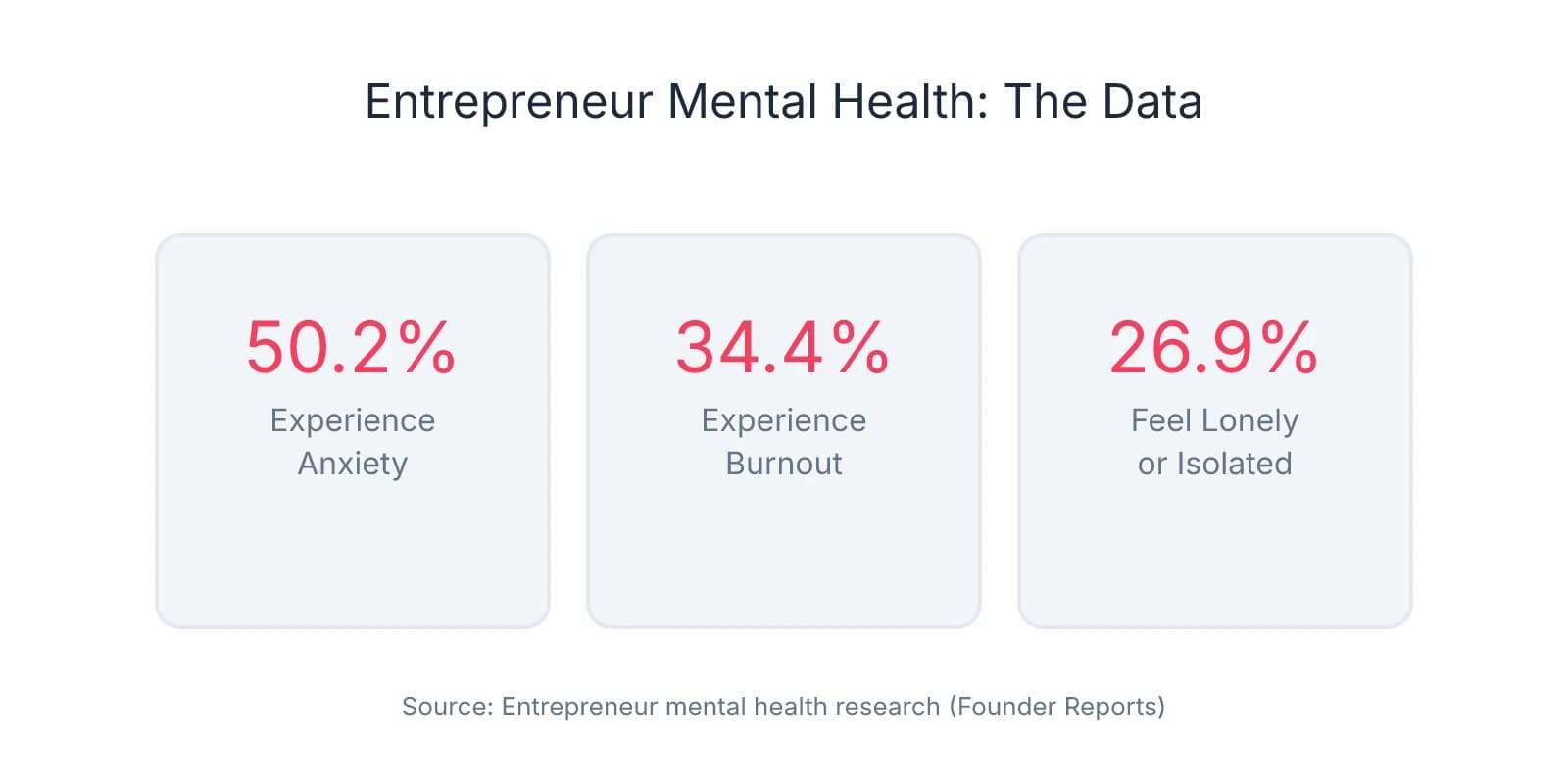
Entrepreneur mental health data shows 26.9% of business owners experience loneliness or isolation—and dentistry compounds this. You work alone in an operatory most of the day. Your staff can't be confidants for financial decisions or personnel conflicts—they're the people those decisions affect. Other local owners may feel like competitors, especially in smaller markets where patient bases overlap.
The British Dental Association notes that even dentists in busy multi-surgery practices experience isolation because final accountability sits with the owner alone. You're liable for patient complaints. You carry the practice loan. You decide whether to replace aging equipment or push another year. Those decisions land on you.
This catches buyers off guard in the first 90 days after closing, when decision volume accelerates and the support structure from dental school or foundation training is long gone. According to the same entrepreneur survey, 50.2% of business owners struggle with anxiety—higher than the general population—and 34.4% experience burnout. The isolation isn't incidental to those numbers. It's structural.
As an associate, you could appear calm to patients while processing doubt internally with colleagues afterward. As an owner, that processing often happens alone. You're expected to project certainty to staff, patients, and lenders—even when navigating unfamiliar territory. The gap between what you're managing internally and what you can express externally widens, and that gap is where loneliness takes root.
This isn't a personal failing. It's a predictable outcome of the role shift. The question isn't whether you'll feel isolated—it's whether you'll build the structures to counter it before it compounds.
The Specific Moments When Isolation Hits Hardest
First staff conflict as the final arbiter: An assistant accuses a hygienist of undermining her in front of patients. Both come to you expecting resolution. As an associate, you could sympathize and suggest they talk to the practice manager. Now you are the practice manager—and the owner. Whatever you decide affects someone's livelihood, team dynamic, and whether the other person starts job hunting. You can't process the situation with either party. You can't call a colleague to gut-check your read. The decision sits with you, and so does the weight of getting it wrong.
Financial pressure that compounds in silence: The practice loan clears your account on the 15th. Payroll hits on the 30th. In between, you're watching collections, calculating whether you'll need reserves, and running scenarios for what happens if next month's production dips. When the loan, payroll, and your family's mortgage all depend on decisions you're making in real time, the pressure feels like standing alone on a narrow ledge. You can't share the numbers with staff without creating anxiety. You can't unload on your spouse every night without transferring the stress. The isolation is financial and constant.
Performing confidence while privately uncertain: A longtime patient asks if you're keeping the same lab for crowns. You've never worked with that lab. You don't know if the margins are competitive or turnaround time is industry standard. But the patient is watching for reassurance that nothing will change. You smile, say the lab's been great, and make a note to research alternatives later. That gap—between what you project and what you actually know—becomes routine. The performance is exhausting, and there's no one you can drop it with during the workday.
Discovering problems post-closing with no one to call: Three weeks in, your compressor fails. The repair estimate is $8,000, or you can replace it for $18,000. The seller mentioned it was "older but working fine." You pull the maintenance records—last serviced four years ago. You don't know if this is normal wear or deferred maintenance. You don't know which vendors are trustworthy or if the quote is inflated. Patient attrition starts ticking up, and you're not sure if it's seasonal, a reaction to ownership change, or a sign the seller's patient relationships were thinner than represented. The seller isn't answering calls. Your attorney can't advise on clinical operations. The decisions keep coming, and you're making them alone.
What Actually Helps: Building Your Support Structure Before Closing
The support structure you need isn't something you assemble after the loneliness sets in—it's infrastructure you build before closing, the same way you'd line up financing or negotiate the purchase agreement.
Peer community: Join before you need it
The mistake most buyers make is waiting until they're drowning to look for other owners who understand the role. By then, you're too exhausted to vet groups, too isolated to show up consistently, and too desperate to filter bad advice from useful insight.
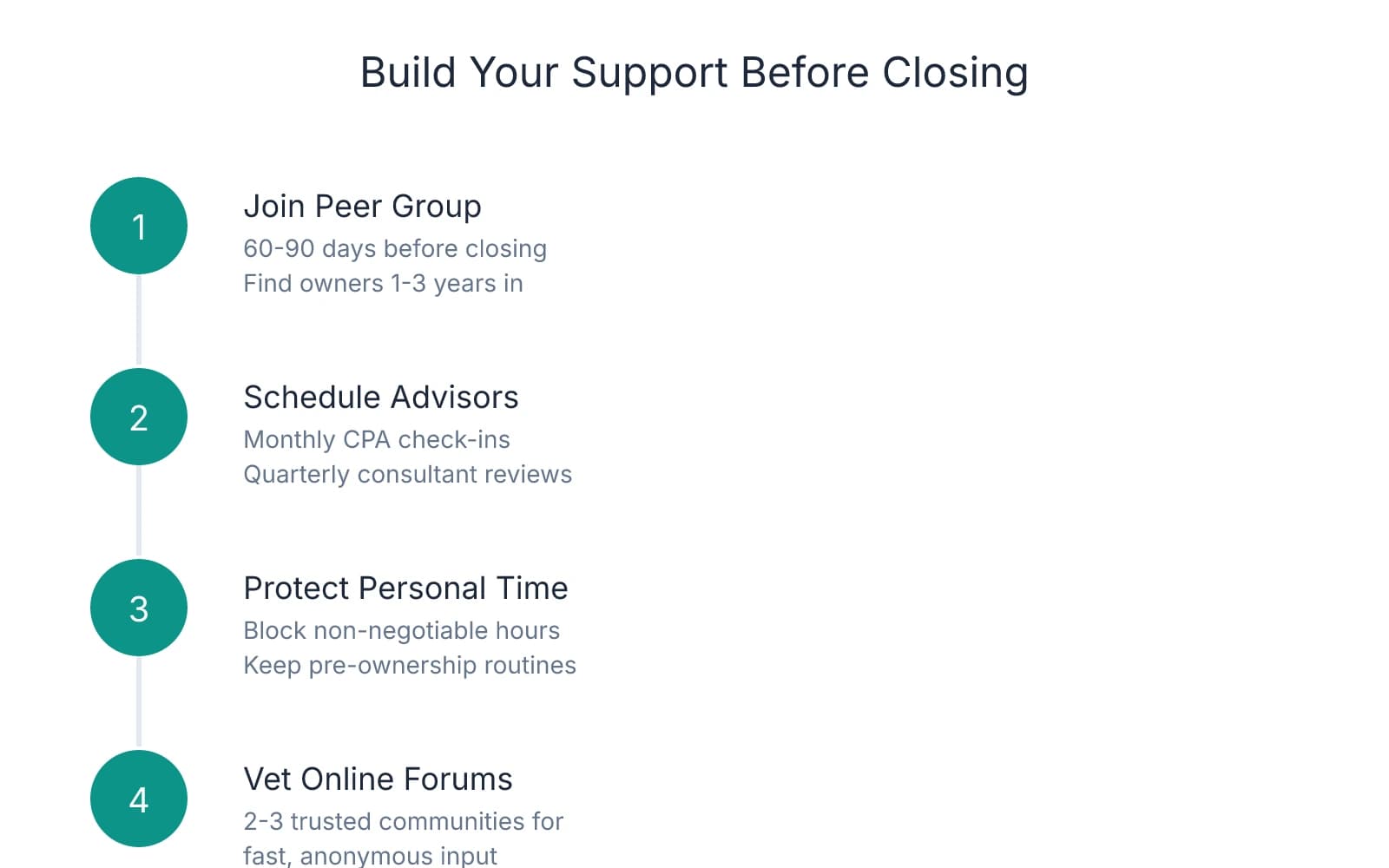
Identify a practice owner mastermind group or study club organized by practice stage, not just clinical topic. A group focused on implant placement won't address the operational and financial decisions that dominate your first year. Look for groups where members are 1–3 years into ownership—they're navigating the same cash flow pressure, staffing conflicts, and patient retention challenges you'll face. Many regional dental societies host owner-specific forums. The Academy of Dental CPAs maintains a directory of peer groups sorted by practice size and ownership structure. Dental Boot Kamp and similar organizations run structured mastermind cohorts that meet monthly.
Join 60–90 days before closing. Show up to two meetings as a buyer, not an owner. You'll hear what other first-time owners wish they'd known, and you'll have a group in place the week you take over. The most valuable conversations happen in the 15 minutes after the formal meeting ends, when someone admits they're not sure if they're paying their associate correctly or whether their lab bills seem high. That's the peer support that counters isolation—not the CE content, but the admission that you're all figuring it out in real time.
Professional advisors: Schedule touchpoints, not crisis calls
Your CPA and practice consultant shouldn't be people you call only when something breaks. Establish monthly or quarterly check-ins before closing—scheduled, recurring meetings where you process decisions, review financials, and gut-check your instincts.
Many buyers work with their CPA only at tax time. That's a missed opportunity. A monthly 30-minute call in your first year creates a forcing function to review your P&L, compare actuals to projections, and surface questions before they become problems. The same applies to your practice consultant or broker—if they helped you buy the practice, they understand the deal structure and can help you interpret whether your first-quarter numbers reflect normal transition lag or a deeper issue.
The value isn't just the advice—it's the scheduled accountability. Knowing you have a call with your CPA on the 15th means you'll pull your reports, identify what's confusing, and show up with specific questions. That rhythm prevents the isolation that comes from making every decision in a vacuum.
Personal boundaries: Protect the relationships that knew you before ownership
The people who knew you before you bought the practice—your spouse, close friends, family members who aren't in dentistry—are often the best buffer against isolation. But only if you protect time with them and resist the urge to turn every conversation into a debrief of your workday.
Block non-negotiable personal time the same way you'd block clinical hours. If you historically had dinner with your spouse on Thursdays, keep that slot. If you played basketball on Saturday mornings, don't let practice paperwork consume it. The temptation in the first year is to treat every evening and weekend as available time to catch up on administrative work. That's how you end up with no one to talk to about anything except the practice.
When your spouse isn't naturally aligned with the decision to buy, this becomes even more critical. They can't be your only outlet for processing practice stress, but they also can't be shut out entirely. The balance most owners find useful: one weekly check-in where you share what's happening, and a mutual agreement that the rest of your time together stays practice-free.
Online communities: Vetted forums for fast input on sensitive topics
Some questions don't wait for your next mastermind meeting. Identify 2–3 vetted online forums or private groups where you can post anonymously when navigating a sensitive decision—whether to fire a longtime employee, how to handle a patient threatening a lawsuit, or whether your associate's production justifies their compensation.
DentalTown and Dental Hacks are two larger forums with active owner communities. Smaller, invite-only groups often surface through your state dental association or through introductions from your CPA or consultant. The key is vetting the group before you need it—look for active moderation, a mix of experience levels, and a norm of constructive feedback rather than venting.
The value isn't just the answers—it's the speed and anonymity. You can post a question at 10 p.m. and have five responses by morning, none of which require you to reveal your identity or location. It's the release valve for decisions that feel too small to schedule a call about but too consequential to make in isolation.
None of this is optional self-care. It's infrastructure that protects the investment you just made. Build it before you need it, and you'll have somewhere to turn when the isolation hits.
Recognizing When Isolation Becomes a Bigger Problem
The line between normal adjustment stress and a pattern affecting your health isn't always obvious when you're in it. Most new owners expect the first year to be hard. What catches people off guard is when the difficulty stops feeling temporary and starts reshaping how they show up—at the practice, at home, and in their own head.
Decision paralysis that wasn't there before: You've always been able to evaluate options and move forward, but now you're stalling on routine choices—whether to reorder supplies from the same vendor, whether to schedule that hygienist interview, whether to return a patient's complaint call. The decisions aren't objectively harder than what you handled as an associate, but the weight of making them alone has you frozen. When avoidance becomes your default, that's worth paying attention to.
Finding reasons not to go to the office: You used to show up early. Now you're hitting snooze, delaying your commute, or scheduling personal appointments that conveniently shorten your clinical day. The practice itself hasn't changed—your relationship to being there has. If the thought of walking into your own practice creates dread rather than purpose, that's not a scheduling problem. It's a signal.
Persistent anxiety that doesn't correlate with actual events: It's one thing to feel anxious the week payroll and your loan payment both hit. It's another to wake up at 3 a.m. with your chest tight, running worst-case scenarios that have no basis in your current numbers. The ADA's 2021 survey found 16% of dentists experienced anxiety—more than three times the rate reported in 2003—and 13% experienced depression. New owners navigating isolation without support infrastructure sit at the higher end of that risk curve.
Withdrawal from relationships that used to matter: You're skipping the study club you attended for years. You're not returning texts from friends. You're short with your spouse or kids in ways that don't reflect how you actually feel about them. The isolation at work starts bleeding into isolation everywhere else, and the people who care about you notice before you do.
Relying on substances to manage stress: A glass of wine after a hard day is normal. A bottle most nights, or feeling like you need it to decompress, isn't. The same applies to sleep aids, stimulants to get through the day, or any pattern where you're chemically managing what used to resolve through rest or conversation.
When any of these patterns persist for more than a few weeks, the next step isn't to push harder or wait for things to improve on their own. It's to bring in professional support—a therapist, an executive coach, or your physician. That's not admitting failure. It's protecting the investment you just made.
You just took on hundreds of thousands of dollars in debt to buy an asset that depends entirely on your ability to show up and perform. If the isolation is affecting your decision-making, clinical focus, or capacity to lead your team, you're not protecting that asset—you're eroding it. Seeking help isn't a detour from building the practice. It's part of the infrastructure that keeps it running.
Therapists who specialize in professional burnout or entrepreneurial stress understand the specific pressures of ownership in ways general practitioners may not. Executive coaches who work with healthcare professionals can help you build decision-making frameworks and accountability structures that reduce cognitive load. Your physician can assess whether the anxiety or sleep disruption has a physiological component needing medical intervention.
The difference between owners who thrive and those who burn out often comes down to whether they built support infrastructure in the first 90 days—and whether they recognized when that infrastructure wasn't enough. If you're identifying with more than one of the patterns above, that's not a sign you made the wrong choice in buying the practice. It's a sign you need to adjust how you're navigating it.
For buyers approaching this transition later in their careers, the emotional adjustment can feel particularly disorienting—buying your first practice at 40 or 45 often means leaving behind a decade or more of established peer relationships and professional identity. The loneliness isn't just about the role shift—it's about starting over in a stage of life when you expected to have things figured out. That's normal, and it's manageable, but only if you name it and build the support you need rather than assuming experience alone will carry you through.
Sources & References
The data and claims in this article are drawn from the following sources. We prioritize government data, peer-reviewed research, and established industry publications to ensure accuracy.
- 17 Mental Health Statistics for Entrepreneurs - Founder Reports— founderreports.com
- Loneliness and isolation as a cause of stress in dentistry— www.bda.orgIndustry
- Dentists' Mental Health: Challenges, Supports, and Promising ... - PMC— pmc.ncbi.nlm.nih.govGovernment
- after buying a dental practice, help with next steps— www.reddit.com
- The burden of burnout - ADA News - American Dental Association— adanews.ada.orgIndustry
Frequently Asked Questions
Find Your Dental Practice Community Today
Buying a dental practice doesn't mean going it alone. Minty Plus connects you with experienced advisors who understand the unique challenges of practice ownership and provide ongoing support through every stage of your journey.