Should You Buy the Practice Where You Work or Look Elsewhere?

Co-Founder, Minty Dental

In Summary
- Working in a practice daily creates emotional attachment that makes it harder to spot declining revenue, outdated systems, or unfavorable lease terms—you've already adapted to problems that would alarm an outside buyer
- Sellers often leverage your attachment during negotiation, assuming you won't walk away even when terms aren't competitive
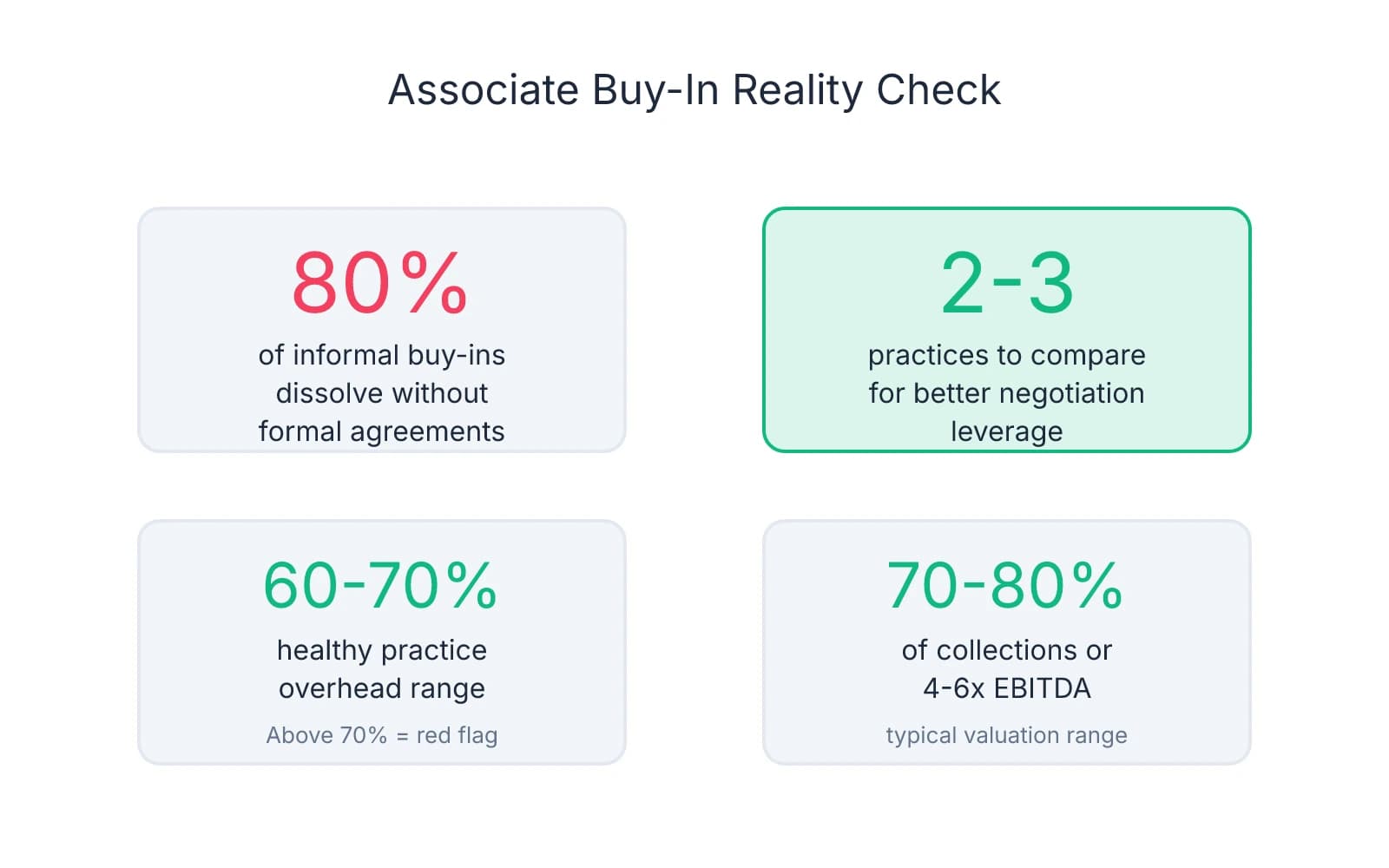
- Approximately 80% of informal associate buy-in arrangements dissolve without formal agreements, sending buyers back to square one after months or years of expectation
- Buyers who evaluate multiple practices develop sharper instincts for recognizing what constitutes a strong deal versus what simply feels comfortable
- The practice where you work may be the right choice, but only if it meets your ownership goals when measured against the broader market—not just because it's familiar
Familiarity Creates Blind Spots You Can't Afford
The practice where you work feels like the obvious choice. You know the patients, the staff trusts you, and you've already spent years learning the systems. The transition would be seamless—no awkward introductions, no steep learning curve, no uncertainty about what you're walking into.
That comfort is exactly what makes the decision risky.
When you work somewhere long enough, you stop seeing problems as problems. Declining hygiene production becomes "just how it's always been." Outdated equipment becomes "still functional enough." A lease with unfavorable renewal terms becomes "something we'll deal with later." You've already adapted to these issues in your role as an associate, so they don't register as red flags when you're evaluating the practice as a buyer. An outside buyer would spot them immediately—and adjust their offer accordingly.
This isn't about questioning your judgment. It's about recognizing that daily immersion creates operational blindness. You're too close to the practice to evaluate it the way you would if you were walking in cold. Where buyers who evaluate multiple practices develop sharp instincts for what constitutes a good deal, you're operating with a sample size of one—and that one comes with years of emotional investment.
The seller knows this. They've watched you build relationships with patients, integrate with the team, and settle into the rhythm of the practice. That attachment gives them leverage during negotiation. They're betting you won't walk away even if the terms aren't competitive, because walking away means starting over somewhere unfamiliar.
Approximately 80% of informal associate buy-in arrangements dissolve without formal agreements in place. Most failures happen because expectations were never clearly defined, or because the associate finally stepped back and realized the practice didn't meet their ownership goals once they evaluated it objectively. By that point, they've lost months or years they could have spent building equity elsewhere.
The legitimate advantages of buying where you work—patient relationships, staff familiarity, operational knowledge—are real. But they only matter if the practice itself is a sound investment. If the fundamentals don't hold up under scrutiny, those advantages become expensive consolations. One pattern worth noting: buyers who compare their current practice against two or three alternatives almost always negotiate better terms, even if they end up staying put. The act of looking elsewhere forces clarity about what the practice is actually worth—and whether the deal on the table reflects that value or just your attachment to it.
A Framework for Comparing Your Current Practice to the Market
Before you can determine whether the practice where you work is genuinely the best opportunity available, you need a baseline for comparison. That means evaluating at least 2-3 other practices in your target market—not because you're planning to buy them, but because you need to see what else is available at what price.
Start with financial performance. Pull three years of profit and loss statements from your current practice and compare collections trends, overhead percentage, and adjusted EBITDA against both industry benchmarks and the practices you're evaluating. A practice collecting $850,000 annually with 65% overhead looks different than one collecting $1.1 million with 68% overhead—the second practice has more absolute profit despite slightly higher expenses. Where many buyers get stuck is focusing on gross collections without examining what's left after expenses. Overhead above 70% often signals structural inefficiencies that will require immediate attention, but context matters: a practice with high lab costs because it does significant crown and bridge work in-house may have higher overhead than one referring out most complex cases, yet still deliver better margins.
Next, assess growth potential. Does the practice have unused operatory capacity you could activate? Are there procedures currently referred out—endo, implants, clear aligners—that you could bring in-house with the right training or associate? Look at the demographic trends in the area: is the population growing, aging in place, or declining? A practice already operating at full capacity with no room to expand and no procedures to recapture has limited upside. You're buying current cash flow, not future growth.
Operational infrastructure matters more than most buyers realize until after closing. Evaluate whether the practice management software, digital records, and front office systems are assets or liabilities. A practice still running paper charts or using outdated software will require significant investment to modernize—costs that should be reflected in the purchase price. Staff stability is another indicator: high turnover in the front office or hygiene department often points to compensation issues, management problems, or cultural dysfunction that won't disappear just because ownership changes.
Valuation and deal structure deserve the same scrutiny. Is the asking price aligned with current market multiples for similar practices in your region? Most general practices trade between 70-80% of collections or 4-6x adjusted EBITDA, depending on patient mix, payer composition, and growth trajectory. If your current practice is priced at the high end of that range but lacks the growth levers or operational systems that justify premium pricing, that's a data point worth noting. Compare the seller financing terms as well: is your current employer offering competitive rates and a reasonable down payment, or are they expecting you to secure 100% bank financing while other sellers in the market are offering 20-30% carryback notes?
One protection many buyers overlook is formalizing terms early. If your current employer has been making vague promises about "selling to you someday," ask for those terms in writing—even if it's just a letter of intent outlining price, structure, and timeline. Sellers who are serious about transitioning to you will formalize the conversation. Those who deflect or delay often have other plans, or they're waiting to see if a better offer materializes.
The goal isn't to disqualify the practice where you work. It's to evaluate it the same way you'd evaluate any other acquisition opportunity: with clear criteria, comparable data, and enough distance to recognize both strengths and weaknesses. Many buyers find that their current practice holds up well under this analysis—but they negotiate better terms because they've seen what else is available.
When Buying Where You Work Makes Sense—and When It Doesn't
The decision to buy your current practice isn't binary—it depends on whether the fundamentals support your ownership goals and whether the seller is treating the transaction as a legitimate business deal.
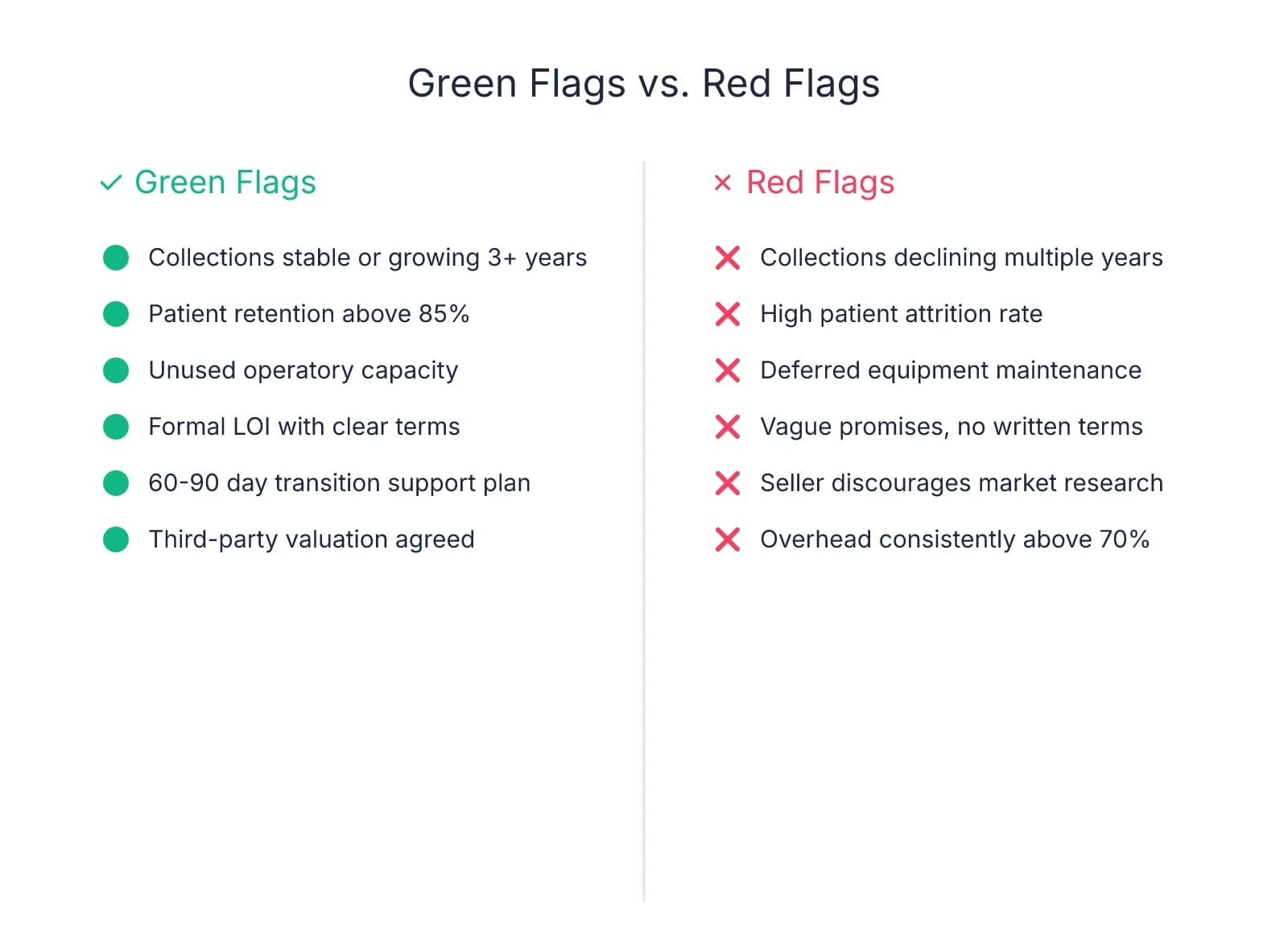
Buying where you work makes sense when the practice demonstrates measurable growth potential and financial stability. That means consistent or increasing collections over the past three years, patient retention rates above 85%, and adjusted EBITDA that comfortably covers your projected debt service plus a reasonable owner salary. If the practice has unused operatory capacity, procedures currently referred out that you could bring in-house, or demographic trends pointing toward population growth, you're acquiring an asset with upside. Most healthy general practices run between 60-70% overhead, with variation depending on payer mix and service offerings. If your current practice sits within that range and shows stable or improving margins, the financial foundation is solid.
The deal structure matters as much as the practice itself. A well-structured associate buy-in includes formalized terms early in the process—ideally a letter of intent that outlines purchase price, payment structure, seller financing terms, and transition timeline. The seller should be willing to provide 60-90 days of structured transition support with defined responsibilities: patient introductions, staff handoffs, and operational knowledge transfer. When both parties treat the transaction as an arm's-length deal with third-party valuation and formal agreements, the buy-in has a much higher success rate.
Where deals go sideways is when the practice is declining and the seller is using your attachment to offload a problem. Red flags include collections trending downward over multiple years, high patient attrition, or deferred maintenance on equipment and facilities that will require immediate capital investment. If the seller has been delaying necessary upgrades—new chairs, digital radiography, practice management software—and expects you to absorb those costs post-closing without adjusting the purchase price, you're inheriting both the debt and the operational burden.
Another pattern worth noting: sellers who won't let you evaluate other practices before committing. If your employer discourages you from looking at other opportunities or pressures you to commit before you've seen comparable listings, they're likely concerned that exposure to the broader market will reveal their practice is overpriced or underperforming. Buyers who haven't compared their current practice against alternatives are negotiating without leverage—sellers know you have no fallback option and price accordingly.
Vague promises without written agreements are another warning sign. If your employer has been saying "we'll work something out" or "you'll take over eventually" for months or years without formalizing terms, they're either not serious about selling to you or they're waiting to see if a better offer materializes. Approximately 80% of informal associate buy-in arrangements dissolve without formal agreements in place, often because expectations were never aligned or because the associate finally recognized the deal didn't meet their ownership goals.
The best associate buy-ins happen when both parties approach the transaction with transparency and mutual accountability. The seller provides full financial disclosure, agrees to third-party valuation, and commits to a structured transition plan. The buyer evaluates the practice against market alternatives, negotiates terms based on objective data, and secures formal agreements before investing further time or emotional energy. When those conditions are met, buying where you work can be the right move—you're acquiring a practice you understand deeply, with relationships already in place and operational knowledge that reduces risk.
How to Evaluate Other Practices Without Burning Bridges
The concern most associates raise when considering other practices is practical: how do you explore opportunities without jeopardizing your current job or damaging the relationship with your employer? The short answer is that confidentiality is standard in practice transitions, and brokers who work with employed buyers navigate this situation routinely.
Start by working with a broker who understands discretion and has experience representing employed associates. Most reputable brokers maintain strict confidentiality throughout the search process—they won't disclose your identity to sellers until you've reviewed financials and decided to move forward. When you first contact a broker, be explicit about your situation: you're employed, you're evaluating opportunities including your current practice, and you need the search conducted confidentially.
Before reviewing any practice's financials, you'll sign a non-disclosure agreement that legally binds you to confidentiality. Schedule practice tours during vacation days, personal time off, or weekends—not during your regular work hours. If you're touring a practice in the same geographic area where you currently work, consider visiting during off-peak hours or arranging a virtual walkthrough first to minimize the chance of running into colleagues or patients who might mention it to your employer.
When the topic of ownership comes up with your current employer—and it will if you've been there for several years—frame your interest as long-term career planning rather than dissatisfaction. Most sellers understand that associates eventually pursue ownership; it's a natural career progression. If your employer asks whether you're looking at other practices, you can acknowledge that you're exploring ownership opportunities in general without committing to specifics. Many buyers find that being transparent about their timeline ("I'm planning to own a practice within the next 12-18 months") actually strengthens the relationship, because it signals seriousness and gives the seller a window to formalize terms if they're genuinely interested in selling to you.
Evaluating other practices gives you negotiating leverage even if you ultimately decide to buy where you work. When you've seen what comparable practices are listing for, what terms other sellers are offering, and what growth potential exists elsewhere, you enter negotiations with data rather than assumptions. Buyers who compare multiple opportunities almost always secure better terms, because they're willing to walk away if the deal doesn't meet their criteria.
The goal isn't to find the perfect practice—it's to find the one that best supports your financial goals and clinical vision. While it's tempting to search for the "perfect practice," experienced practice transition advisors recommend keeping an open mind and finding a practice with a great foundation—one that you can transform into your own vision. Many buyers who start their search assuming they'll buy where they work end up choosing a different practice because the comparison revealed better growth potential, stronger financials, or more favorable deal structure. Others confirm that their current practice is the right choice, but they negotiate a better purchase price because they approached the transaction as an informed buyer rather than an attached associate.
Looking elsewhere isn't a betrayal of your current employer—it's a protection of your investment and your future. The decision to buy a practice will shape your career and financial trajectory for the next decade or longer. Your employer would conduct the same due diligence if they were buying a practice, and they'll respect you more for approaching ownership strategically rather than emotionally.
Sources & References
The data and claims in this article are drawn from the following sources. We prioritize government data, peer-reviewed research, and established industry publications to ensure accuracy.
- Should I Sell My Dental Practice to an Associate?— www.menlotransitions.comIndustry
- Joining and Leaving the Dental Practice— ada.orgIndustry
- Joining and Leaving the Dental Practice— ada.orgIndustry
- Build Your Dental Dream Home— www.ada.orgIndustry
Frequently Asked Questions
Ready to Find Your Perfect Practice?
Whether you're considering buying your current practice or exploring other opportunities, Minty can guide you through the acquisition process. Our marketplace connects you with available practices nationwide, while Minty Plus provides expert support to help you make the right decision for your career.