How to Keep Staff After Buying a Dental Practice

Co-Founder, Minty Dental

In Summary
- Replacing a single dental hygienist costs $15,000–$25,000 when you account for recruiting, training, and lost production during the vacancy
- About 19% of dental hygienists changed employers in 2024, with higher pay, better work environment, and appreciation driving most departures
- When key staff leave after closing, patients often follow—especially hygiene patients who've built years-long relationships with their provider
- Retention isn't something that happens naturally; it's something you structure into the LOI and manage actively in the first 90 days
Staff Turnover After Acquisition Costs More Than You Budgeted For
Most buyers budget for equipment upgrades, working capital, and maybe a few months of reduced production during the transition. What they don't budget for is replacing the hygienist who leaves three weeks after closing—or the front desk coordinator who quits when the seller stops showing up.
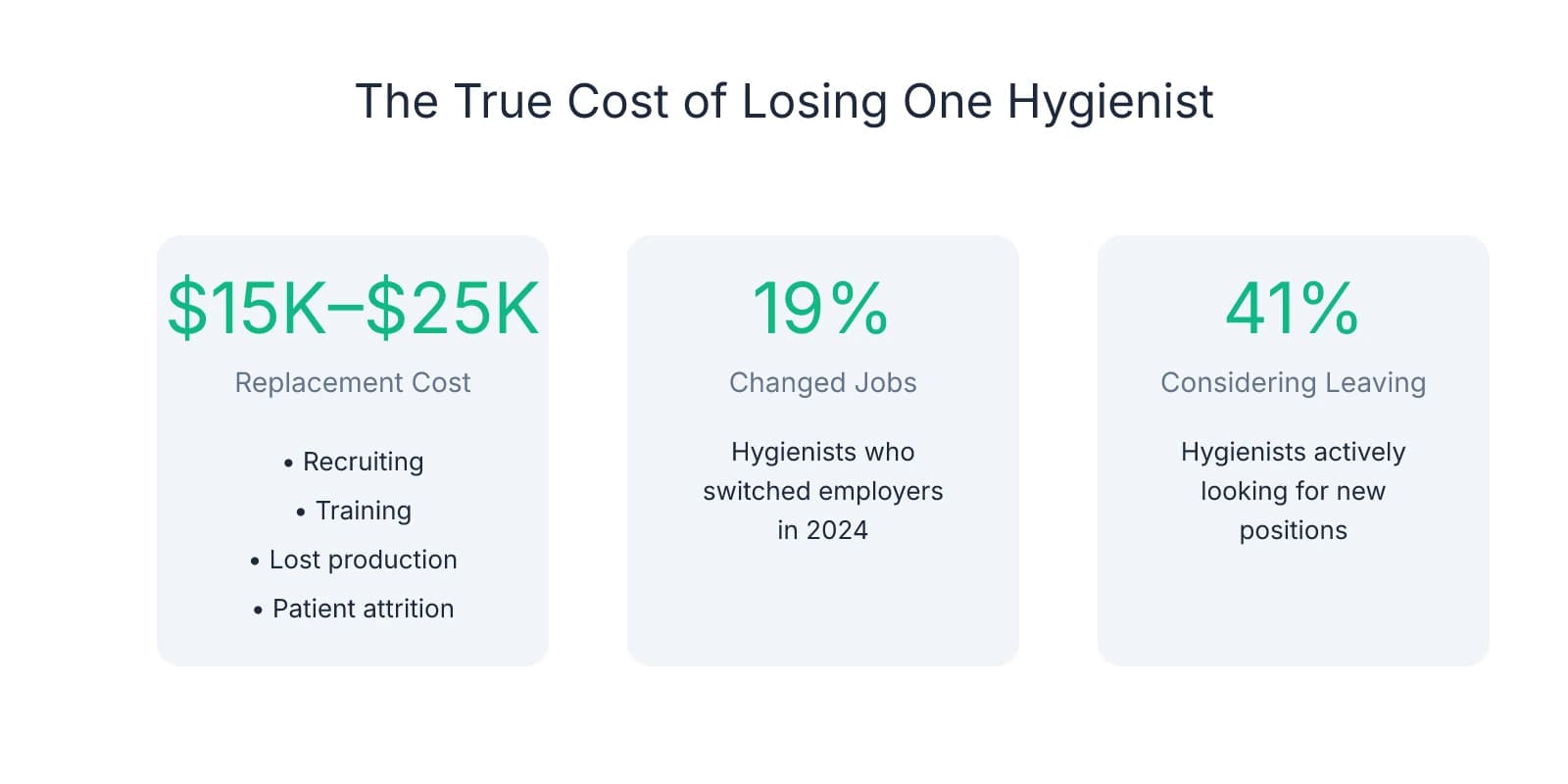
Replacing a dental hygienist costs $15,000–$25,000 when you factor in recruiting, onboarding, training, and lost production during the vacancy. That's not a line item in your pro forma. And it's not a one-time event—about 19% of dental hygienists changed employers in 2024, with higher pay, better work environment, and more appreciation cited as the top reasons for leaving. If your practice has four hygienists, basic math says you're likely losing one within the first year unless you do something different.
The financial hit extends beyond the vacancy itself. When a hygienist leaves, their patients often follow—especially if that hygienist has been with the practice for years and built trust with families. Hygiene patients don't just reschedule; they disappear. And unlike a crown that didn't get scheduled, you won't see that revenue show up in next quarter's numbers.
Where buyers get burned is assuming staff retention happens naturally if you're "nice" or "keep things the same." It doesn't. Staff are watching how you handle the transition, whether the seller shows up as promised, and whether you're someone they want to work for long-term. If those signals are weak or inconsistent, they start looking—and in a market where 41% of hygienists are considering new jobs before the year ends, they won't have trouble finding one.
One step many buyers overlook is building retention terms directly into the letter of intent—things like structured seller transition support, staff retention bonuses tied to 90-day milestones, and clear communication protocols during the handoff. These aren't HR niceties. They're deal protections that keep your production schedule intact and your patient base stable while you're still learning names.
The first 90 days set the tone for whether staff stay or start interviewing elsewhere. If you treat retention as something you'll "figure out later," you're already behind. The practices that hold their teams together through a transition are the ones that planned for it during negotiation and executed on it from day one.
What to Lock Into the LOI and Purchase Agreement
The deal structure itself is your first retention tool. Most buyers treat the LOI as a price negotiation and move on. What they miss is that the LOI sets expectations for how the transition actually happens—and those expectations determine whether staff feel supported or abandoned when you take over.
One provision worth negotiating early is when and how the seller tells staff about the sale. Announce too early—say, six months before closing—and you create flight risk. Staff start updating résumés, fielding recruiter calls, and mentally checking out before you've even signed. Announce too late, and you breed resentment. Walking in on day one to a team that just found out yesterday rarely goes well. Many buyers structure a 30–45 day pre-closing disclosure window, giving staff enough time to process the change without enough time to panic.
A 60–90 day seller transition period is standard, but the value sits in how you define it. Vague language like "the seller will assist with transition" means nothing when the seller shows up twice and disappears. What tends to work better is specificity: the seller introduces you to each staff member individually, co-manages the first two weeks, stays available for questions during business hours, and participates in at least one team meeting per month. When structured this way, staff see continuity rather than abandonment.
Non-disparagement clauses protect you from sellers who undermine you without realizing it. A comment like "Well, I never did it that way, but..." or "The new doctor wants to change things" signals doubt to staff—and doubt spreads. The clause doesn't need to be punitive; it just needs to exist. Most sellers don't intend harm, but intention doesn't matter when a longtime hygienist hears the previous owner questioning your judgment.
Where deals often go sideways is when compensation and benefits aren't addressed in the purchase agreement. Staff don't care about your financing structure or your five-year growth plan. They care whether their paycheck, PTO balance, and health insurance survive the transition. If you're planning changes—say, moving from a traditional PPO plan to a high-deductible option—staff need to know that before closing, not after. Surprises around benefits are one of the fastest ways to lose people.
One protection many buyers overlook is tying part of the purchase price to retention outcomes. A staff retention bonus or escrow holdback creates accountability. For example, 5% of the purchase price held in escrow and released only if 80% of full-time staff remain employed 90 days post-closing. This isn't about punishing the seller—it's about aligning incentives. If the seller knows their final payout depends on a smooth handoff, they're more likely to show up, stay engaged, and speak positively about the transition.
These provisions don't guarantee retention, but they shift the odds in your favor. The practices that hold their teams together are the ones that treated retention as a deal term, not a post-closing hope.
How to Communicate with Staff Before and After Closing
The first conversation with staff sets the tone for everything that follows. Walking into that meeting unprepared is how you lose people before you've even started.
If possible, meet staff before closing—ideally in a casual setting where the seller introduces you and frames the transition positively. This isn't a formal interview. It's a chance for staff to see you as a person, not just "the new owner." When the seller says something like, "I'm excited about this transition—Dr. [Name] is going to take great care of you and our patients," it signals continuity rather than disruption. Staff take their cues from the seller's tone. If the seller seems confident and supportive, staff are more likely to feel the same.
The announcement meeting—typically held 30–45 days before closing—is where you address the three things staff care about most: job security, compensation continuity, and what will (and won't) change immediately. Start with the reassurances that matter: "No one is losing their job because of this transition. Your pay, benefits, and PTO balances will remain the same. We're not making any major changes in the first 90 days—I'm here to learn how things work and support what's already working well."
Avoid making promises you can't keep. If you're planning to switch software systems or renegotiate insurance contracts six months out, don't claim "nothing will change." Instead, be clear about your timeline: "In the first 90 days, my focus is on learning from all of you and maintaining continuity for patients. Any larger changes will happen gradually, and I'll involve the team in those conversations before making decisions."
Schedule one-on-one conversations with key staff—office manager, lead hygienist, senior assistants—in the first two weeks. These aren't performance reviews. They're listening sessions. Ask questions like: "What's working well here that I should protect?" "What's one thing you'd change if you could?" "What concerns do you have about this transition?" Staff who feel heard in the first two weeks are far more likely to stay engaged through the inevitable friction points that follow.
Watch for passive resistance—staff who seem cooperative in meetings but make subtle negative comments to patients or undermine changes behind the scenes. A front desk coordinator who says, "Well, the old doctor never required that..." or a hygienist who tells patients, "I'm not sure how long I'll be here with the new owner..." can erode trust faster than an outright confrontation. These behaviors often stem from fear or uncertainty, not malice. Address them directly but privately: "I've noticed some comments about how things used to be done. If you have concerns about how we're doing things now, I'd rather hear them from you directly so we can work through them together."
The practices that retain staff through transitions are the ones where communication felt consistent, honest, and respectful from the first meeting onward. Staff don't need perfection—they need to know you're paying attention and that their role in the practice matters.
Your First 90 Days: What to Change and What to Leave Alone
The instinct to improve things immediately is natural—you just spent hundreds of thousands of dollars on this practice, and you can already see what needs fixing. But the first 90 days aren't about proving you're in charge. They're about earning the right to make changes without losing the people who keep the practice running.
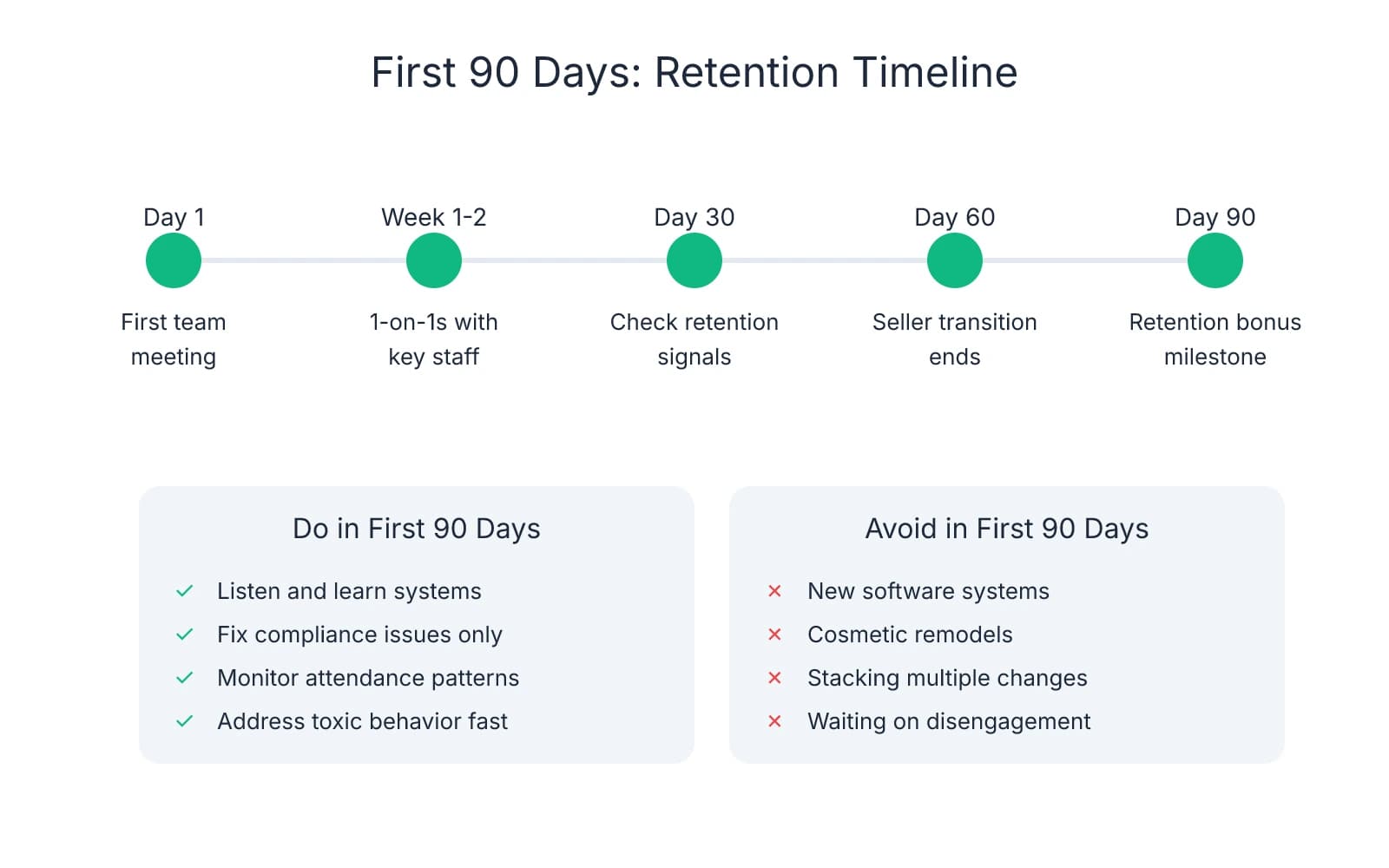
Delay cosmetic and operational changes until you understand what actually needs fixing versus what just looks outdated to you. New scheduling software, a lobby remodel, replacing functional-but-old equipment—these changes feel productive, but they signal to staff that you don't value what's already working. A practice that's been profitable for twenty years doesn't need a systems overhaul in week three. Spend your first 90 days learning why the current systems exist before deciding they need replacing.
The exception is when something is genuinely broken—not just inefficient, but actively creating risk or harming patient care. Make immediate changes only when they address compliance issues, broken systems, or toxic behavior—and when you do, explain the reasoning to the team. If the sterilization protocol isn't up to OSHA standards, fix it immediately and frame it as patient safety, not criticism of the previous owner. If a staff member is consistently rude to patients or undermining you in front of others, address it directly and quickly. One toxic voice can poison an entire team, and waiting "to see if it gets better" rarely works.
Where buyers often get burned is stacking multiple changes at once. Switching to a new practice management system while also dropping insurance plans and raising fees compounds anxiety for both staff and patients. Each change requires adjustment time. When you layer them, staff feel overwhelmed and patients feel destabilized. If you're planning significant operational shifts, sequence them—one change per quarter, with clear communication about why it's happening and how it benefits everyone involved.
Monitor retention signals in the first 90 days: attendance patterns, attitude shifts during team meetings, patient complaints that mention specific staff members, or longtime employees who suddenly stop contributing ideas. These signals often appear before someone gives notice. A hygienist who's been punctual for ten years and suddenly calls in sick twice in one month is telling you something. A front desk coordinator who used to run morning huddles and now sits silently is disengaging. Address these shifts early—often a private conversation is enough to surface concerns before they turn into resignations.
If a key staff member is clearly disengaged or actively undermining the transition, act quickly. Waiting for them to "come around" rarely works, and their behavior influences everyone else. A direct conversation—"I've noticed you seem frustrated with some of the changes we're making. Can we talk about what's going on?"—either surfaces fixable concerns or clarifies that they've already decided to leave. Either way, you're better off knowing than hoping. The problems buyers face in the first 90 days are rarely about clinical skills—they're about managing people through uncertainty.
The goal isn't to freeze everything for three months. It's to prioritize changes that improve operations without alienating the people who make those operations possible. Staff don't expect perfection. They expect thoughtfulness. Keeping staff informed about the process, timelines, and potential changes alleviates anxiety and fosters trust, particularly when you demonstrate that you're paying attention to how changes affect them—and that you're willing to move slowly when it matters. Most people stay when they see this thoughtfulness. The ones who leave were likely leaving anyway, and you're better off knowing that in month two than month eight.
Sources & References
The data and claims in this article are drawn from the following sources. We prioritize government data, peer-reviewed research, and established industry publications to ensure accuracy.
- How Staff Attrition Drains Your Dental Practice » DentalPost— www.dentalpost.net
- 5 notes on dental hygienist turnover in 2024— www.beckersdental.com
- 3 Tips for Transitioning Staff After Buying a Dental Practice— ppssellsdds.com
- How to Handle Staff Transitions During a Practice Sale— schiffdentalbrokerage.com
Frequently Asked Questions
Ready to acquire with confidence and stability?
Smooth staff transitions are crucial when acquiring a dental practice. Minty Plus provides hands-on guidance through every phase of ownership change, helping you retain key team members and protect your investment from day one.