Dental Practice Lease Term: How Many Years Do You Need?

Co-Founder, Minty Dental

In Summary
- Most dental practice acquisitions are financed with SBA 7(a) loans (10-year terms) or conventional dental loans (5 to 7 years), and lenders require the remaining lease term to equal or exceed the loan term.
- Remaining lease term has two parts: firm term (guaranteed years left) and renewal options, which count only if they transfer to the buyer.
- Most dental lenders require at least 5 years of combined term; many require a full 10 years to match an SBA loan.
- A lease with 3 firm years plus options that are personal to the seller may give the lender only 3 recognized years.
- Lenders review both the final purchase agreement and the final lease documents before funding, so the lease is not a closing-day formality.
Lease Term Is a Financing Requirement, Not Just a Business Preference
Remaining lease term defined: In a dental practice acquisition, remaining lease term has two components. Firm term is the number of guaranteed years still left on the current lease. Renewal options are additional periods the tenant can elect to extend, but they count toward remaining term only when they are transferable to the buyer. A lease with 3 years of firm term and two 5-year options that are "personal to the seller" may effectively offer only 3 years of lender-recognized term.
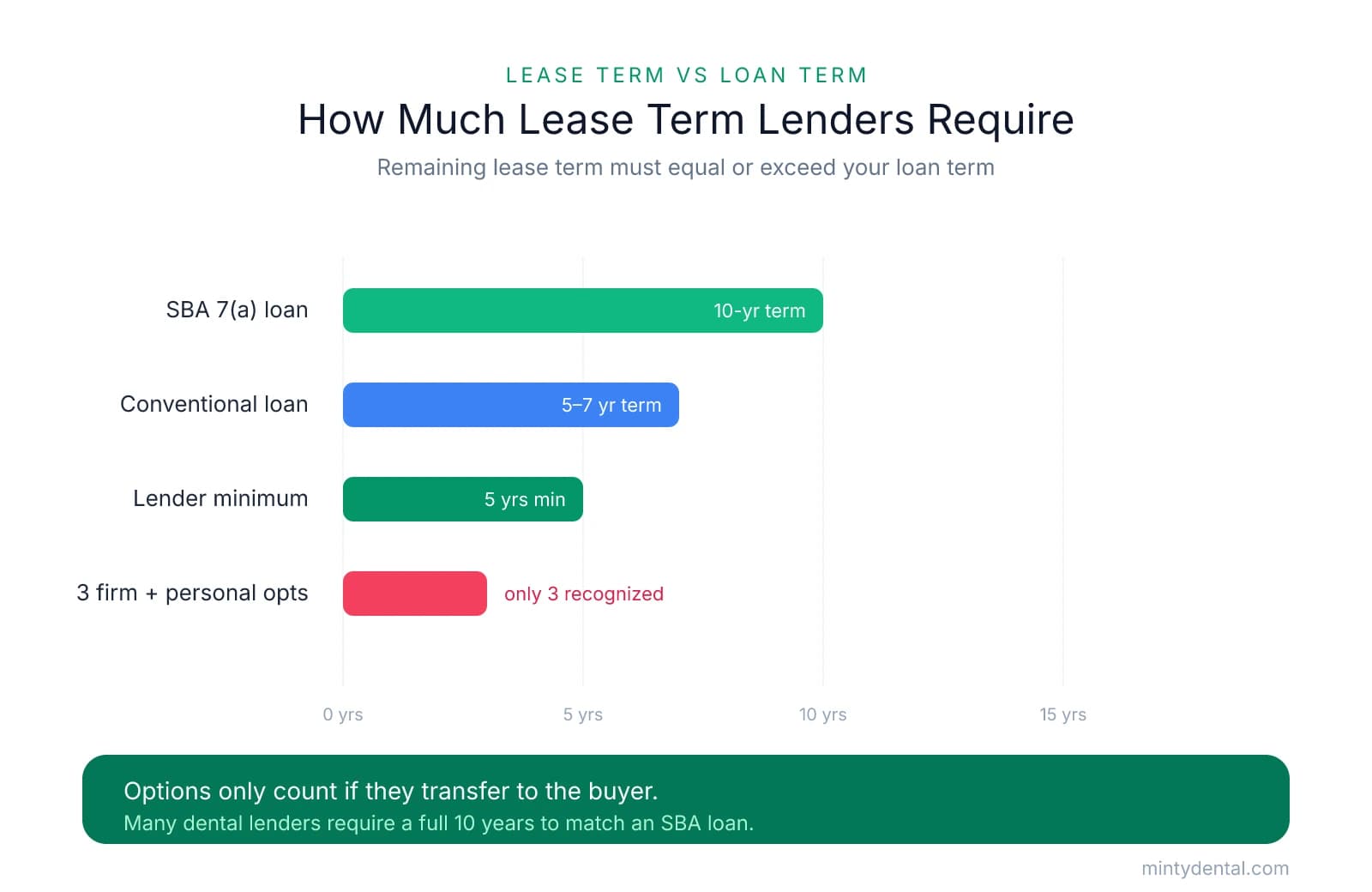
That distinction drives whether a lender will fund the deal. Most acquisitions are financed with either an SBA 7(a) loan carrying a 10-year term, for which the lease term plus buyer-exercisable renewal options must equal or exceed the loan term, or a conventional dental loan running 5 to 7 years, and the lease has to cover the life of the loan. When you run acquisition numbers through a dental loan calculator, the payment schedule assumes you can occupy the space for the full repayment period.
In practice, banks funding a buyer look for at least 5 years of term, with many dental lenders requiring 10. That combined figure can come from firm term alone or firm term plus assignable options.
The reasoning is credit risk. A dentist forced to relocate mid-loan faces relocation costs and patient attrition that can strain the ability to make payments, so lenders want assurance the buyer can stay put through the repayment period. For that reason, lenders review both the final purchase contract and the final lease documents before drafting loan documents. If the lease falls short, financing can stall until the term is extended, which is why many buyers address term adequacy early rather than treating the lease as a closing-day formality.
Four Lease Clauses That Can Undermine a Deal Even With Adequate Term
A lease can carry ten years of firm term and still create serious problems for a buyer. The years remaining tell you whether the space clears the lender's minimum, but specific clauses govern whether the lease actually transfers, on what terms, and at what cost.
-
Assignment clause language. This clause governs whether the seller can transfer the lease to you and under what conditions. The wording of the consent standard carries most of the weight. Language stating the landlord "may withhold consent at sole discretion" gives the landlord an effective veto, meaning they can refuse the assignment for any reason or none. A buyer-favorable version states consent "shall not be unreasonably withheld," which limits refusal to legitimate concerns such as your creditworthiness or intended use. When the standard is discretionary, the assignment itself becomes a negotiation the landlord controls.
-
Recapture clause. When the seller requests consent to assign, a recapture clause lets the landlord cancel the lease entirely rather than approve the transfer, which can leave the buyer with no location and no basis for financing. The request also cannot be withdrawn once made, so the landlord gains leverage to demand payment in exchange for approval. Identifying this clause before the seller formally requests consent gives both parties room to plan.
-
Personal renewal options. Renewal options labeled "personal to the seller" do not transfer with an assignment, so they do not count toward the lender's required term. A lease showing 3 firm years plus two 5-year options may present as 13 years but deliver only 3 to a buyer. Releasing personal options often requires landlord negotiation, sometimes for a fee.
-
Profit-sharing clause. Some leases entitle the landlord to a percentage of practice sale proceeds. This language is often buried in the assignment section and directly reduces the seller's net proceeds, which can affect price expectations and deal structure once discovered.
Two financial terms sit alongside term adequacy. Rent escalation determines how base rent grows: a fixed 2 to 3% annual increase is predictable and modelable at signing, while CPI-linked clauses passed inflation directly to tenants and produced 7 to 9% single-year jumps during 2021 to 2023. Most dental leases are also triple net (NNN), adding property taxes, building insurance, and maintenance on top of base rent, so buyers should model total occupancy cost rather than the headline rent figure.
How to Evaluate a Lease Before Submitting a Letter of Intent
The most useful time to review the lease is before you submit a letter of intent, not after financing is approved. Lease problems discovered late can delay a closing or unwind a deal, and by then you may have paid for an appraisal, a chart audit, and legal drafting on a purchase that cannot fund. Working through the lease first tells you whether the location can support the loan you plan to use and where you may need to negotiate with the landlord.
-
Calculate effective remaining term. Add the firm years remaining to any renewal options that transfer with an assignment. Options labeled personal to the seller do not count, so confirm each option is assignable before including it. The figure you use for financing is the lender-recognized term, not the headline number on the lease summary.
-
Match the term to your loan type. If you plan to use an SBA 7(a) loan, the effective term should reach 10 years. If you are using conventional dental financing, 5 to 7 years is the typical floor. When the effective term falls short of your loan, treat term extension as a condition to resolve before or at closing.
-
Read the assignment clause. Identify whether landlord consent is required and what standard applies. Language granting consent at the landlord's sole discretion gives the landlord a veto and is worth flagging for renegotiation toward a "not unreasonably withheld" standard.
-
Have a dental real estate attorney review the fine print. Recapture clauses, profit-sharing provisions, and restoration or surrender requirements are often buried in the document. A dental real estate attorney, distinct from a general commercial attorney, will recognize how these provisions affect a practice transfer. Overlooking lease details can create financial and operational risks that affect the practice's value after closing.
-
Model total occupancy cost. Under a triple net lease, add property taxes, building insurance, and maintenance to base rent, then apply the escalation structure across your loan term. Lenders factor these costs into their cash flow analysis, so your projections should as well.
-
Confirm the use clause fits your plans. A restrictive use clause can prevent adding specialties or services the seller never offered. If you intend to expand the service mix, verify the lease permits it.
Findings from this review also give you concrete grounds to negotiate price or terms when a clause materially changes the deal.
What to Do When the Lease Is Short: Extension, Renegotiation, and Price Adjustment
Finding that the remaining term falls short of your loan requirement is common, and in most cases it is a solvable problem rather than a reason to abandon the deal. The path to resolution depends on why the term is short and how the landlord responds.
Scenario 1: Short firm term, but assignable options bring the total to 10 or more years. If the lease shows fewer than 5 firm years but includes renewal options that clearly transfer with the assignment, the combined term may already satisfy the lender. Confirm this with your lender in writing before proceeding, because the calculation turns on whether the options are genuinely buyer-exercisable.
Scenario 2: Short firm term and options personal to the seller. Here your attorney negotiates a lease extension as part of the assignment, drafted simultaneously with the purchase agreement rather than as a separate step afterward. The buyer's attorney customarily handles the assignment and negotiates the extension so the finalized lease carries enough term to satisfy the bank. Landlords are generally motivated to cooperate, because they are swapping one tenant for another qualified one and gain little from blocking the deal. They may, however, use the opening to reset rent to market rates, require a new personal guarantee, or charge to make personal options transferable.
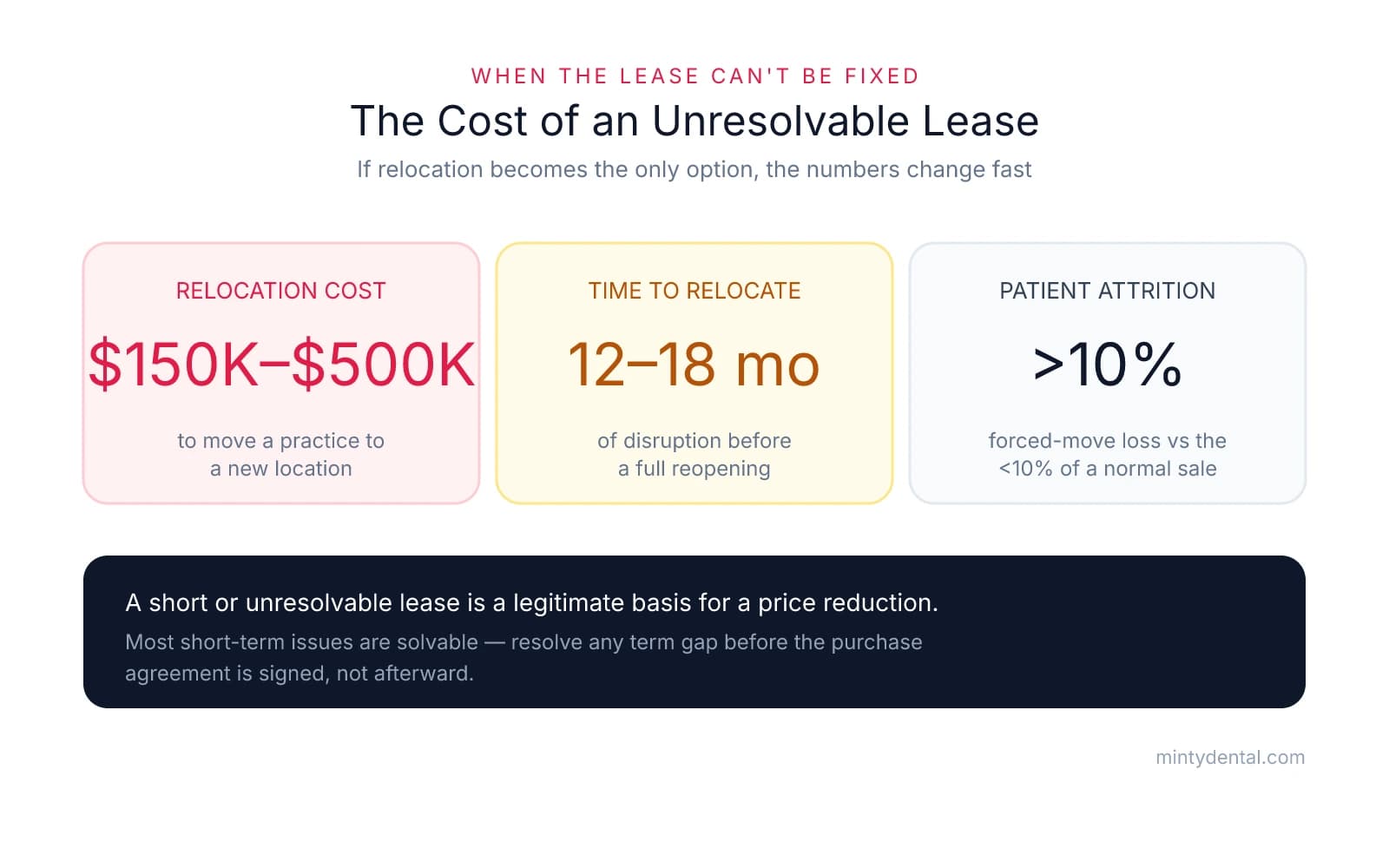
Scenario 3: Truly unresolvable. If the landlord refuses to extend, the assignment is blocked, or a recapture clause is triggered, the location risk becomes real. Relocating a practice tends to cost between $150,000 and $500,000 and take 12 to 18 months, and forced-move attrition can exceed the sub-10% patient loss typical of a well-managed ownership transition. Those figures belong in any revised offer, because a short or unresolvable lease is a legitimate basis for a price reduction that reflects the risk you would be absorbing.
Two sequencing points matter. First, a seller should not extend the lease unilaterally before finding a buyer, because doing so creates personal liability for the full extended term without a buyer in place to assume it. Second, any term gap should be resolved before the purchase agreement is signed, not afterward.
When you evaluate the deal alongside its cash flow across slow months, the lease term should comfortably cover the repayment period before you commit.
Sources & References
The data and claims in this article are drawn from the following sources. We prioritize government data, peer-reviewed research, and established industry publications to ensure accuracy.
- 504 loans - Small Business Administration - SBA— sba.govGovernment
- What if my lease only has a few years left, can I still sell my dental practice?— practiceorbit.comIndustry
- Assignment Clauses in Dental Office Leases: What Every Dentist Should ...— dentistryinsured.comIndustry
- How Rent Escalations Work in Commercial Leases— theleasinglawyers.comIndustry
- Review Lease Before Buying a Dental Practice in LA - Polished Legal— polishedlegal.comIndustry
- Lease Considerations When Buying a Dental Practice— dentaltransitions.comIndustry
Ready to acquire a dental practice with confidence
Understanding lease terms is crucial when evaluating a practice purchase. Minty's acquisition experts guide you through every due diligence step, ensuring you understand lease obligations before closing.