Buying a Dental Practice Directly from the Seller Without a Broker

Co-Founder, Minty Dental

In Summary
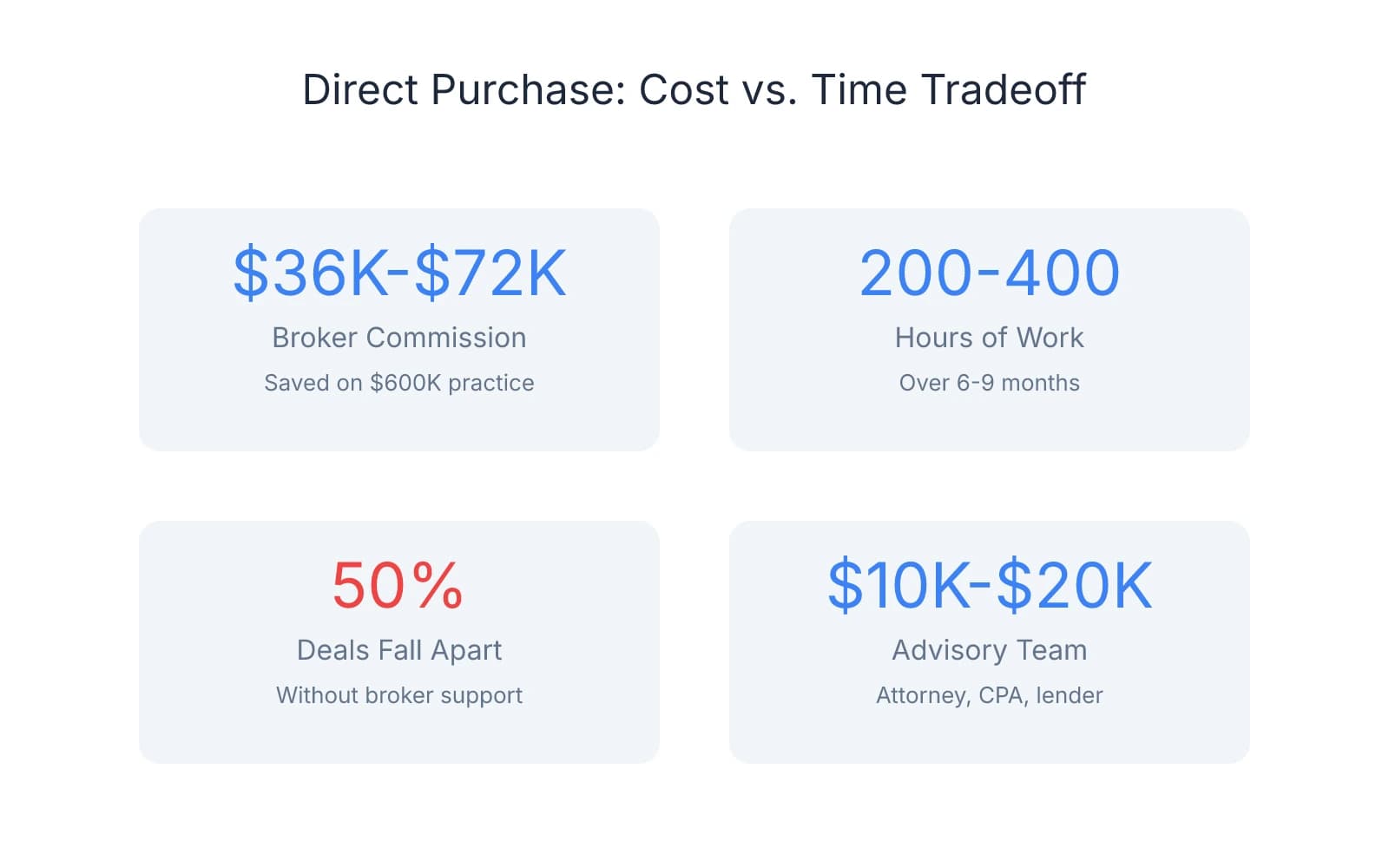
- Broker commissions typically range from 6-12% of the purchase price, paid by sellers but often reflected in the asking price—on a $600,000 practice, that's $36,000-$72,000
- Without a broker, you inherit 200-400 hours of work over 6-9 months: finding opportunities, managing negotiations, coordinating due diligence, and keeping the deal on track
- Roughly 50% of unrepresented transactions fall apart before closing, compared to higher completion rates when brokers manage the process
- Success depends on assembling the right advisory team—attorney, CPA, lender—since you're now responsible for work that would normally be distributed across multiple professionals
Direct Purchases Save Commission Fees But Shift All Transaction Work to You
When you buy a dental practice directly from the seller, you're making a tradeoff: no broker commission in exchange for taking on every responsibility brokers typically handle. That commission isn't small—brokers charge sellers 6-12% of the sale price, with smaller practices (under $400,000 in collections) often landing at the higher end. On a $600,000 practice, that's $36,000-$72,000 the seller pays at closing.
That commission funds a specific set of services. Brokers manage valuation, market the practice to qualified buyers, screen inquiries, facilitate negotiations, coordinate due diligence timelines, and troubleshoot friction points between contract signing and closing. When you remove the broker, those responsibilities shift to you and the seller, neither of whom typically has experience managing a transaction of this complexity.
The time commitment is substantial. A typical practice sale requires 200-400 hours from start to finish, spread across 6-9 months. You'll be reviewing financial records, negotiating terms, coordinating with your attorney and lender, managing inspection schedules, and keeping the seller engaged when momentum stalls. If you're working full-time as an associate or owner, that's evenings and weekends for the better part of a year.
The completion rate reflects this difficulty. Bankers and attorneys estimate that 50% of practices sold without a broker fall apart before closing. Buyers lose interest when another opportunity surfaces. Sellers and buyers clash over contract language without an intermediary to translate intent. Due diligence uncovers issues neither party knows how to resolve.
This doesn't mean direct purchases are a bad decision—it means they require different preparation. One pattern that tends to work: the seller is motivated (retiring, relocating, or facing a clear deadline), the practice financials are clean and well-documented, and you have both the time and temperament to manage a complex negotiation while maintaining your day job. The buying dentist who told the ADA his direct purchase was "a fluke" had all three—a seller who acted like a mentor, a straightforward practice in a small town, and the bandwidth to handle months of back-and-forth without professional support.
If you're considering a direct purchase, the central question isn't whether you can save the commission—it's whether you can dedicate several hundred hours over six to nine months to manage this transaction, and whether you're prepared to assemble an advisory team (attorney, CPA, lender) who can fill the gaps a broker would normally cover.
How to Find For-Sale-By-Owner Practices That Never Hit the Market
The best FSBO opportunities rarely appear on public listings. Most direct-sale practices change hands through personal networks, referrals, and direct outreach—channels that require deliberate effort but often surface sellers before they commit to a formal listing process.
Start with your professional network. Dental school classmates who graduated 5-10 years ahead of you are entering the age range where some start thinking about exit timelines. CE instructors often know multiple practice owners in your target region and hear about succession plans before they become public. Supply reps visit dozens of practices monthly and pick up on retirement signals—mentioning you're looking can put you on their radar. Local dental society events create natural opportunities to ask established practitioners if they know of anyone planning a transition.
Your advisory team is another underutilized channel. Lenders who specialize in dental practice acquisitions see deal flow across their entire market and often know of sellers exploring options before they list. Dental-specific CPAs work with multiple practice owners and hear about succession planning during tax strategy conversations. One question—"Do you know of any practices that might come available in the next 12-18 months?"—can surface opportunities that never reach a broker.
State dental association classifieds and niche Facebook groups like "Dental Offices for Sale - no Brokers" aggregate FSBO listings that sellers post directly. These channels attract owners who've already decided against broker representation, which means you're competing with a smaller buyer pool. The tradeoff: listings are often sparse on detail, and you'll need to do more upfront work to assess whether the opportunity is worth pursuing.
Cold outreach to practices in your target area can uncover sellers who haven't yet decided to list. If you're focused on a specific town or region—particularly relevant if you're relocating to a new state—identify practices where the owner is likely in their late 50s or 60s and send a brief, professional letter expressing interest in a future purchase. Many retiring dentists prefer a direct, personal transaction over a brokered sale, especially when selling to a younger dentist who they can mentor through the transition. The response rate is low, but the quality of leads is high—these are sellers who value relationship and continuity over maximizing price through competitive bidding.
One pattern worth noting: finding the practice is often the easiest part. The real work—valuing the practice, negotiating terms, managing due diligence, and keeping the transaction on track through closing—starts after you identify an opportunity. If you're activating these channels, make sure you have bandwidth to follow through when a seller responds.
Assemble Your Advisory Team Before You Make an Offer
Without a broker managing the transaction, your success depends entirely on the quality of your advisory team. The three professionals you need in place before you make an offer: a dental-specific attorney, a dental CPA or accountant, and a lender experienced in practice acquisitions. Each fills a gap that would normally be covered by broker expertise, and trying to save money by using generalist professionals—or worse, sharing the seller's attorney—is where most direct purchases go sideways.
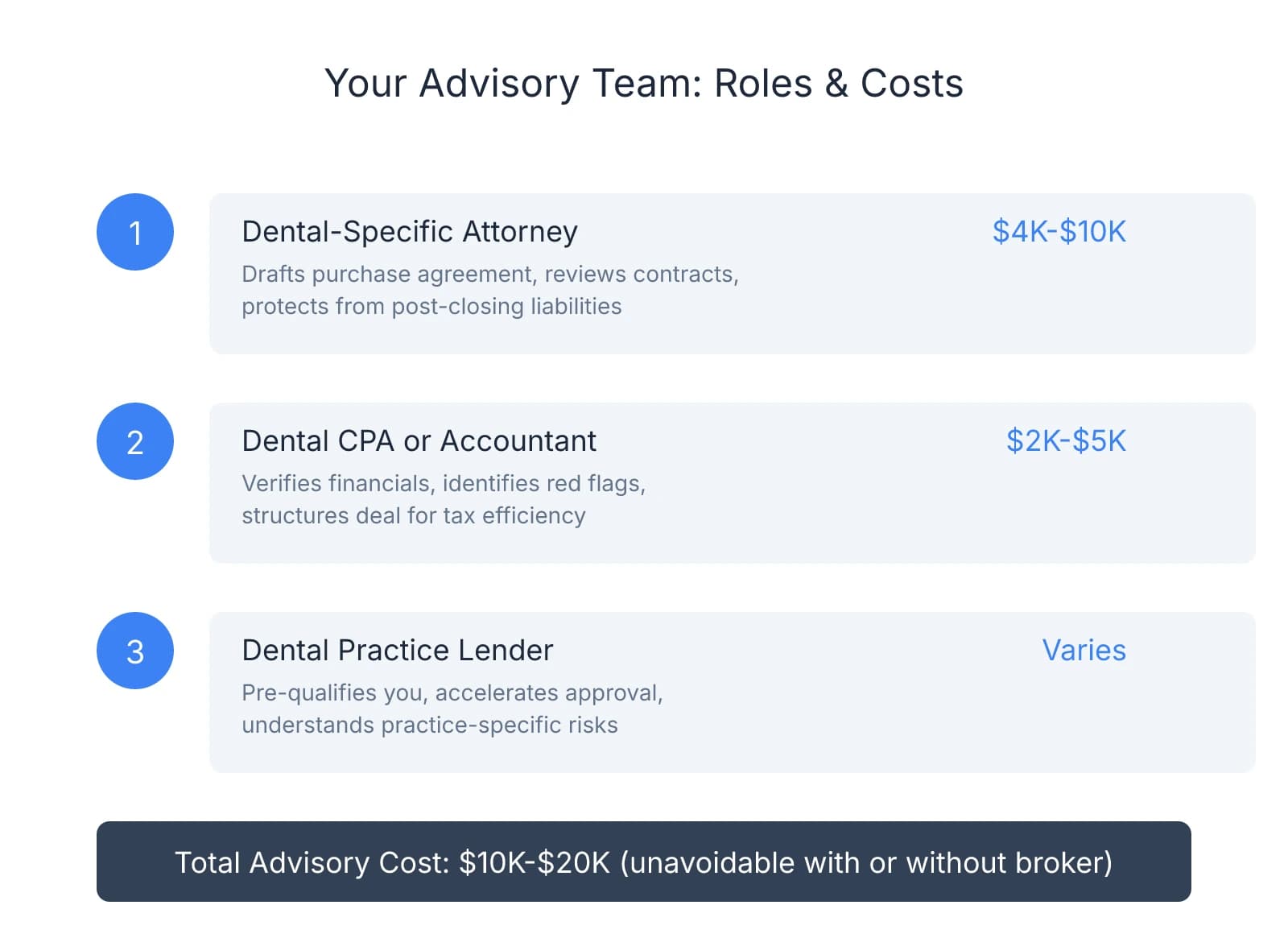
A dental-specific attorney ($4,000-$10,000) drafts the purchase agreement, reviews all contracts, and protects you from post-closing liabilities. General business attorneys miss practice-specific risks that dental attorneys catch immediately: restrictive covenant language that's unenforceable in your state, transition clauses that don't define seller responsibilities clearly enough, or asset purchase agreements that leave you exposed to the seller's pre-closing liabilities. Your attorney's job is to translate your verbal agreement with the seller into contract language that protects your interests when things don't go as planned. One protection many buyers overlook is structured transition support—ideally 60-90 days with defined responsibilities—which your attorney should build into the purchase agreement with consequences if the seller doesn't follow through.
Where deals go sideways is when buyers try to share the seller's attorney to save money. This creates a direct conflict of interest. The attorney's duty is to their client—the seller—which means they're negotiating against you while drafting the documents you'll sign. You need independent representation. If the seller suggests using their attorney "to keep costs down," that's a signal they don't understand how transactions work or they're hoping you'll accept terms you wouldn't with proper counsel.
A dental CPA or accountant ($2,000-$5,000) verifies the seller's financials, identifies red flags, and structures the deal for tax efficiency. The seller will hand you three years of profit and loss statements, but those numbers need independent verification. Your CPA pulls bank statements, reconciles reported collections against deposits, and checks whether the seller's "adjusted EBITDA" actually reflects sustainable cash flow or includes one-time windfalls that won't recur under your ownership. They also catch patterns that signal risk: declining hygiene revenue, rising lab costs that suggest deferred maintenance, or patient attrition the seller hasn't disclosed.
Beyond verification, your CPA helps structure the deal to minimize your tax burden. Whether you're buying through an LLC or S Corp changes how the purchase is taxed, and your CPA should be advising on entity structure before you sign the letter of intent. They'll also help you allocate the purchase price across asset categories in a way that maximizes depreciation benefits while staying defensible if the IRS audits the transaction.
A dental practice lender pre-qualifies you, accelerates approval timelines, and understands practice-specific risks that general commercial lenders miss. When you find a practice, you need to move quickly—most sellers expect a financing commitment within 30-45 days of signing the letter of intent. If you're starting the lender conversation after you've identified the practice, you're already behind. Lenders who specialize in dental acquisitions can pre-qualify you based on your income, credit, and debt-to-income ratio, which tells you exactly what purchase price range you can support before you start negotiating. They also understand realistic financing timelines and can flag potential approval issues early.
General commercial lenders treat dental practices like any other small business acquisition, which means they miss risks that dental lenders catch immediately: patient concentration (one insurance plan representing 40% of revenue), referral dependence (an ortho practice that relies on three referring GPs), or demographic shifts that threaten long-term collections. Lenders typically look for the practice to generate at least $1.20 in collections for every $1 spent between practice expenses and the doctor's personal expenses—a cash flow ratio that ensures you can support the debt load while maintaining profitability.
The total cost for your advisory team—attorney, CPA, and lender fees—typically runs $10,000-$20,000, and these expenses are unavoidable whether you use a broker or not. The difference is that in a brokered transaction, the broker coordinates these professionals and keeps the timeline moving. In a direct purchase, you're the project manager. That means assembling your team before you find a practice, not after. When a seller says yes to your offer, you should already know your attorney's availability, your CPA's review process, and your lender's approval timeline.
Managing Due Diligence and Negotiations Without a Broker
Due diligence is where direct purchases most often collapse. Without a broker to structure the process and keep both parties accountable, buyers either skip critical verification steps or overwhelm themselves trying to audit everything simultaneously. The work breaks into two parallel tracks: financial and operational verification (led by your CPA and attorney) and on-site assessment (which you must handle personally). Both need to happen within the 30-60 day window most sellers will tolerate between signing the letter of intent and closing.
Your CPA should verify three years of tax returns, profit and loss statements, and accounts receivable aging—not the summary numbers the seller provides, but the underlying bank statements and deposit records that prove collections actually occurred. Many sellers present "adjusted" financials that add back personal expenses or one-time costs, which is standard practice, but your CPA needs to verify that those adjustments reflect sustainable cash flow rather than optimistic projections. One pattern worth paying attention to: accounts receivable aging that shows 60+ day balances above 15% of total AR often signals collection problems or insurance write-offs the seller hasn't disclosed. If the numbers don't reconcile or the seller resists providing documentation, that's when understanding whether profitability is real or inflated becomes critical.
Your attorney must review the lease, confirm assignability, and identify any liens or encumbrances on the practice assets. Lease issues kill more deals than any other single factor. If the landlord won't assign the lease to you, or if they're demanding a rent increase that changes your cash flow projections, you need to know before you've spent $15,000 on advisory fees. Your attorney also runs lien searches to confirm the seller actually owns the equipment and patient records they're selling—liens from unpaid equipment financing or tax obligations can follow the assets to you if they're not cleared at closing.
Patient chart audits, equipment inspections, and staff interviews are your responsibility—budget time for multiple on-site visits during the due diligence period. Pull a random sample of 50-100 patient charts and look for incomplete treatment plans, missing documentation, or patterns that suggest records haven't been maintained properly. Walk through the operatories and check equipment condition yourself—don't rely on the seller's assurances. Talk to staff individually, away from the seller, and ask direct questions: Are patients happy? Has anyone left recently? What concerns do they have about the transition? Staff who've been with the practice for years often know about patient attrition or operational problems the seller hasn't disclosed.
Negotiations without a broker require a different approach than most buyers expect. The seller isn't a neutral party, and without an intermediary to buffer emotions and translate intent, conversations about price, terms, or discovered issues can become personal quickly. One protection many buyers find valuable is using your attorney as a proxy for contentious discussions. When due diligence uncovers something that justifies renegotiating the purchase price—patient attrition, undisclosed equipment problems, or financial discrepancies—your attorney can frame the conversation as a legal and financial matter rather than a personal criticism of how the seller ran their practice.
Structure contingencies that let you walk away if due diligence uncovers deal-breakers. Your purchase agreement should include explicit exit clauses tied to financial verification, lease assignment approval, and satisfactory due diligence findings. These aren't aggressive negotiating tactics—they're standard protections that give you leverage if the seller's representations don't match reality. If the lease can't be assigned, if collections are 20% below what the seller claimed, or if patient charts reveal systematic problems, you need the contractual right to terminate without losing your deposit. Many sellers resist contingencies because they've never been through a transaction before, which is where your attorney earns their fee by explaining that no lender will fund a deal without these protections in place.
What tends to happen in direct purchases is that buyers either trust too much or verify too aggressively. The first group skips verification steps to avoid offending the seller and discovers problems after closing when it's too late to negotiate. The second group treats due diligence like an adversarial audit and damages the relationship so badly the seller stops cooperating. The balance: verify everything your advisory team recommends, but frame it as standard practice rather than distrust. When a seller asks why you need three years of bank statements when they've already provided P&Ls, the answer is simple: "My lender requires it for approval, and my CPA needs it to verify the numbers support the purchase price."
If due diligence reveals issues that make you question the deal, your decision framework should be: Can this be fixed with a price adjustment, or does it change whether you want to own this practice at all? Equipment that needs replacement can be addressed by reducing the purchase price. A lease the landlord won't assign, or patient attrition that suggests the practice is in decline, can't be fixed with a discount. Know the difference, and be willing to walk away when the fundamentals don't work. The cost of a failed deal is the advisory fees you've already paid. The cost of closing on a bad deal is years of financial stress and a practice that never performs as expected.
Sources & References
The data and claims in this article are drawn from the following sources. We prioritize government data, peer-reviewed research, and established industry publications to ensure accuracy.
- How Much Will I Get for The Sale of My Practice?— omni-pg.comIndustry
- What Does It Actually Cost To Sell A Dental Practice?— ada.orgIndustry
- How to Find a Dental Practice for Sale— www.dentalbuyeradvocates.com
- The Importance Of Building A Strong Team Of Advisors— dentaltransitions.com
- Buying a Dental Practice: Top Tips for a Successful Dental Practice ...— business.bankofamerica.com
- How to Buy a Dental Practice: The Complete 2026 Guide— www.integritypracticesales.com
Frequently Asked Questions
Ready to find your next practice opportunity?
Whether you're negotiating directly with a seller or exploring multiple listings, having the right support matters. Minty Plus provides hands-on guidance through every stage of your acquisition—from deal evaluation to post-close management.