Hiring Your Own Attorney When Buying a Dental Practice

Co-Founder, Minty Dental

In Summary
- Dental practice brokers are paid by the seller — typically 8–12% of the sale price — which shapes every recommendation they make, including which attorney they suggest to buyers
- In most states, an attorney cannot ethically represent both buyer and seller in the same transaction; broker-referred attorneys often represent "the transaction" or the seller, not the buyer
- The purchase agreement is drafted first by the broker's attorney, meaning the starting document is written to favor the seller by design
- Many buyers assume the broker's attorney is a neutral party — this is one of the most common and costly misconceptions in dental practice acquisitions
- Hiring an independent, dental-specific attorney is the most reliable way to ensure the contract is optimized for your position, not just sufficient to close
The Broker's Attorney Works for the Deal — Not for You
Independent legal representation in a dental practice acquisition means retaining an attorney whose sole obligation is to the buyer — someone with no prior relationship to the broker, no incentive tied to closing speed, and no history of drafting documents that favor the other side of the table.
That distinction matters more than most first-time buyers realize.
Dental practice brokers are paid by the seller, typically between 8–12% of the final sale price. That's not a criticism — it's simply how the model works. But it does mean the broker's financial interest is in closing the transaction, and closing it cleanly. The attorney they recommend is almost always someone they've worked with across multiple deals: a professional relationship built on smooth closings, not on hard negotiations.
This doesn't make broker-referred attorneys incompetent. Many are experienced, and plenty of deals close without incident. The more useful question is whether the contract was optimized for the buyer or just sufficient to close — and that distinction often lives in the details of the language.
In most states, an attorney is ethically prohibited from representing both buyer and seller in the same transaction. But broker-referred attorneys often occupy a grey zone: they may technically represent only the seller, or frame their role as representing "the transaction." Buyers frequently walk away from those conversations assuming they had an advocate in the room. In most cases, they didn't.
A pattern worth paying attention to: the broker's attorney drafts the initial purchase agreement. That means the starting point of every negotiation is a document written with the seller's interests as the baseline. Revisions can move things, but you're always working backward from someone else's first draft — a structurally weaker position than having your own counsel involved from the beginning.
It's worth knowing that brokers can obscure more than just legal terms — the same incentive structure that shapes attorney recommendations can shape how practice information gets presented throughout the process.
Where many buyers get into trouble isn't in the obvious terms — the purchase price, the closing date — but in the clauses that only matter when something goes wrong: representations and warranties, indemnification language, contingency protections, and what happens if the seller's stated revenue doesn't hold post-close. Those are exactly the provisions a deal-focused attorney has little incentive to push hard on.
What a Buyer's Attorney Actually Reviews — and What Gets Left Out Without One
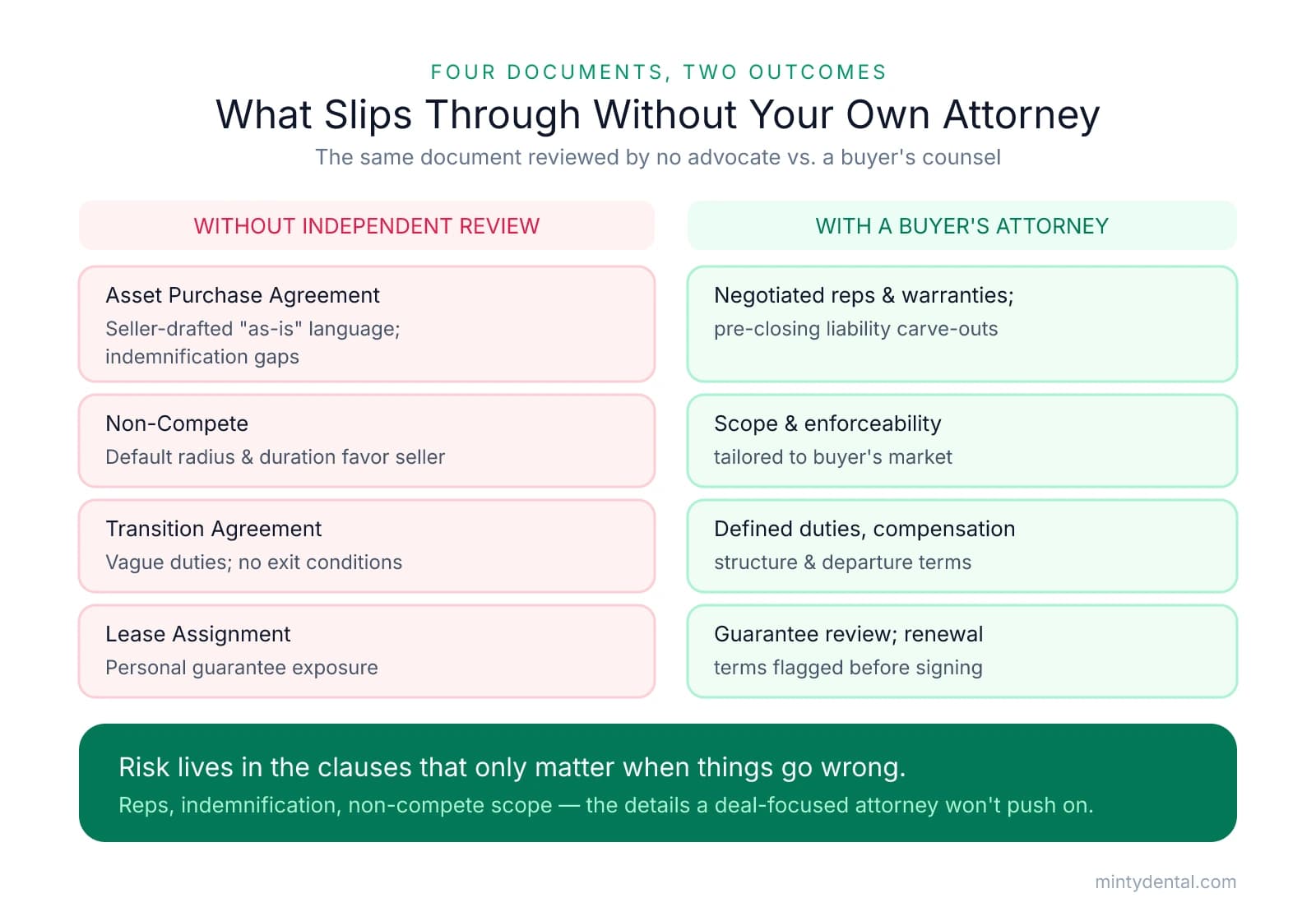
Understanding where independent review adds value is easier when you look at the specific documents involved — and what tends to slip through without a buyer's advocate at the table.
1. The Asset Purchase Agreement
This is the central document, and it's where liability exposure is most often buried. A buyer's attorney will scrutinize the representations and warranties section — the seller's formal claims about the practice's condition — and push for indemnification language that holds the seller accountable if those claims turn out to be false post-closing.
Without independent review, vague "as-is" language can quietly shift pre-closing liabilities onto the buyer: unpaid vendor balances, unresolved tax obligations, and open insurance claims with pending EOBs that surface weeks after closing. The definition of "purchased assets" versus excluded liabilities is equally important — a poorly drafted clause can leave the buyer absorbing obligations they never agreed to take on, including retreatment liability for the seller's prior clinical work.
2. The Non-Compete Agreement
Default non-compete language tends to favor the seller — shorter duration, narrower radius, and carve-outs that let the seller continue treating existing patients or practicing a specialty nearby. A buyer's attorney negotiates scope and enforceability based on the specific market and state law. In some states, overly broad non-competes are unenforceable as written, which means a poorly structured clause offers no real protection at all.
3. The Seller Transition / Employment Agreement
This document defines what the seller actually does after closing — and what happens if they don't do it. Without defined responsibilities, compensation tied to performance, and clear exit conditions, sellers can reduce their presence early, refer patients elsewhere, or undermine the buyer's authority with staff. The post-closing employment agreement is one of the most negotiable documents in the deal, and one of the most frequently left vague.
4. The Lease Assignment
Personal guarantee exposure and unfavorable renewal terms are routinely buried in lease assignments. A buyer's attorney reviews landlord consent requirements, flags whether the buyer is inheriting a below-market or above-market lease, and negotiates guarantee carve-outs where possible. The lease assignment process carries its own risks that are easy to underestimate until you're locked into a 10-year term with no exit.
The Case for Dental-Specific Counsel
A general business attorney can review contracts — but may miss issues specific to dental transactions. Corporate practice of dentistry rules vary significantly by state and affect how ownership must be structured. Medicaid assignment restrictions can limit whether a buyer can continue serving the seller's existing patient base. These aren't edge cases; they're the kind of regulatory details that only surface when the attorney reviewing your deal has done this before in your state.
| Document | Without Independent Review | With a Buyer's Attorney |
|---|---|---|
| Asset Purchase Agreement | Seller-drafted "as-is" language; indemnification gaps | Negotiated reps/warranties; pre-closing liability carve-outs |
| Non-Compete | Default radius and duration favoring seller | Scope and enforceability tailored to buyer's market |
| Transition Agreement | Vague responsibilities; no exit conditions | Defined duties, compensation structure, and departure terms |
| Lease Assignment | Personal guarantee exposure; inherited unfavorable terms | Guarantee review; renewal terms flagged before signing |
| Regulatory Compliance | State-specific dental rules may go unreviewed | Corporate practice of dentistry and Medicaid issues identified |
How to Find the Right Attorney — and What to Ask Before Hiring One
With a clear picture of what's at stake across each document, the next question is practical: how do you find the right person, and how do you know when you've found them?
Why Dental-Specific Experience Matters
A general business attorney can read a contract — but dental practice acquisitions carry regulatory layers that most business attorneys haven't encountered. Corporate practice of dentistry rules vary by state and can affect how ownership must be structured at closing. Medicaid and Medicare assignment restrictions may limit whether you can continue serving the seller's existing patient base. State dental board licensing requirements can create timing issues that affect the closing date itself.
These aren't obscure edge cases. They're the kind of details that surface mid-deal — or worse, post-closing — when the attorney reviewing your documents hasn't navigated them before in your state.
Where to Find Dental-Specific Attorneys
Three referral sources tend to be the most reliable:
- Your state dental association — Most maintain attorney referral lists specifically for practice transactions. These are attorneys who've worked within your state's regulatory environment.
- Dental CPAs — Accountants who specialize in dental practices work alongside dental attorneys regularly. If you're already working with a dental-focused CPA, ask who they'd recommend for buyer-side representation.
- Dental-specific lenders — Banks and lenders that focus on dental practice financing see dozens of deals annually and often have attorney referral relationships worth asking about.
Questions Worth Asking Before You Hire Anyone
An initial consultation is also a screening call. A few questions that tend to reveal a lot:
- How many dental practice acquisitions have you represented buyers in over the past 12 months — not sellers?
- What's your fee structure — flat fee or hourly?
- Have you worked in this state's regulatory environment, specifically around corporate practice of dentistry rules?
- Do you have any existing relationship with this broker or the seller's attorney?
That last question matters. A small referral network means the same attorneys often appear on both sides of deals — which can create the same structural misalignment this article started with.
Cost in Context
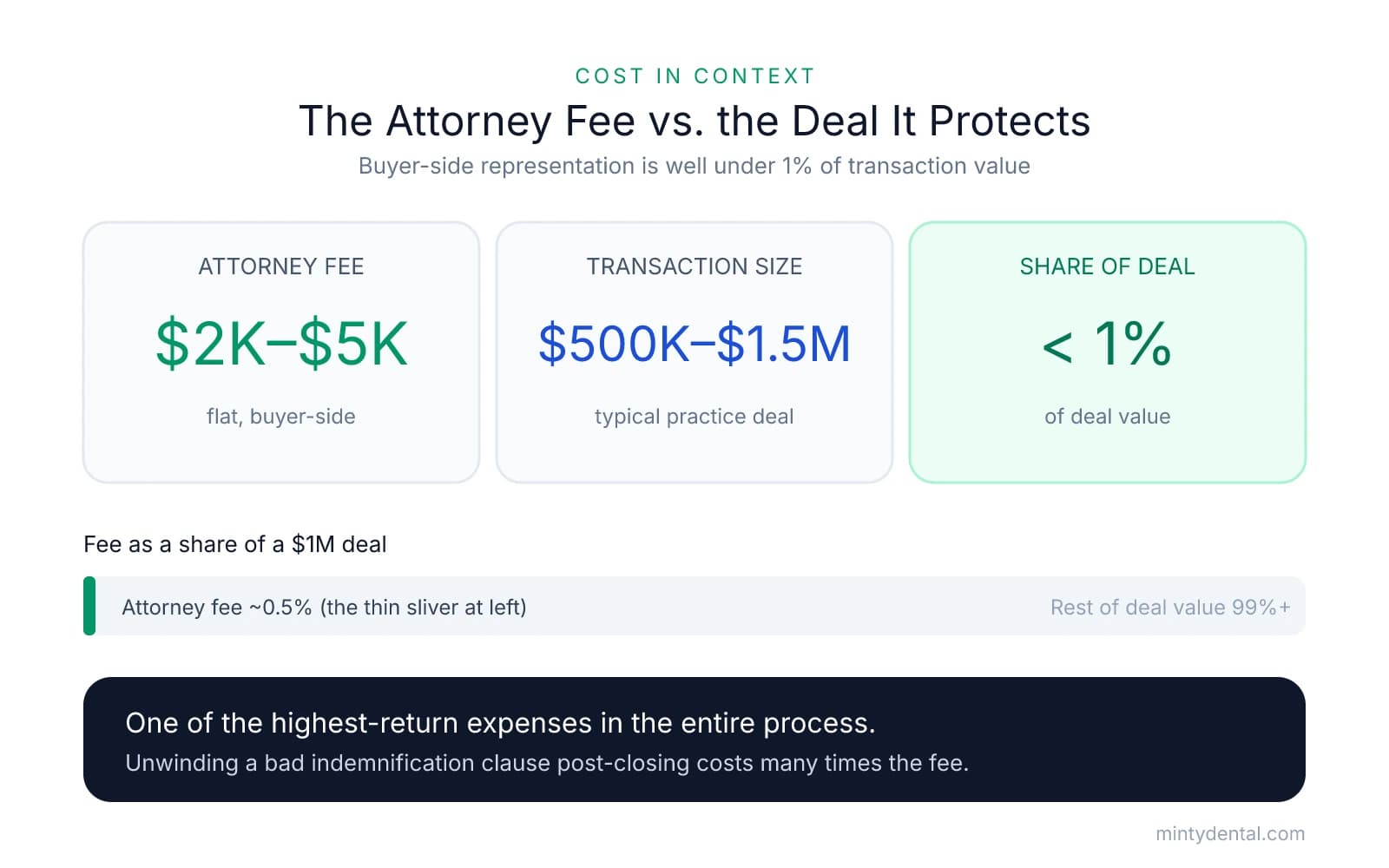
Most dental practice acquisition attorneys charge $2,000–$5,000 in flat fees for buyer-side representation. On a $500K–$1.5M transaction, that's well under 1% of the deal value — and one of the highest-return expenses in the entire process.
When to Engage
The right time to bring in an attorney is before you sign the LOI — or immediately after. Understanding what the LOI actually locks you into before you sign is exactly the kind of protection independent counsel provides. By the time the purchase agreement draft has been circulated, you're already working from someone else's starting point.
Your Legal Setup Protects More Than the Closing Day
The purchase agreement you sign on closing day doesn't expire when you get the keys. The language your attorney negotiated — or didn't — continues to govern your exposure for years afterward: indemnification claims if the seller's representations turn out to be false, non-compete enforcement if they open a practice nearby, retreatment disputes over prior clinical work, and post-closing behavior that no handshake agreement can reliably prevent.
That's the reframe worth carrying out of this article. Independent legal representation isn't a transaction cost — it's ownership protection that starts at closing and runs the length of your tenure.
The broker's attorney's misalignment isn't personal. It's structural. Brokers are paid to close deals, and the attorneys they refer have built relationships on doing exactly that. That dynamic doesn't make anyone a bad actor — it just means the buyer is the one party in the room without a dedicated advocate, unless they hire one.
The cost is proportionate. Most dental-specific attorneys charge $2,000–$5,000 for buyer-side representation. On a $500K–$1.5M transaction, that's a rounding error — and unwinding a poorly drafted indemnification clause or unenforceable non-compete post-closing will almost always cost more than the attorney's fee many times over.
Strong legal review and strong due diligence work together — neither substitutes for the other. The same discipline that leads you to scrutinize goodwill allocation and its tax consequences or work through a malpractice history review before closing is what makes independent legal representation worth the investment.
A practical four-step sequence to get this right:
- Identify 2–3 dental-specific attorneys in your state before you're under LOI — your state dental association, a dental CPA, or a dental-focused lender are the most reliable referral sources
- Confirm they represent buyers, not sellers — ask directly how many buyer-side dental acquisitions they've handled in the past year
- Engage them at the LOI stage, not after the purchase agreement draft has already been circulated
- Let them review every document before you sign — the purchase agreement, non-compete, transition employment agreement, and lease assignment each carry distinct risks that compound when left unreviewed
The deals that go sideways rarely do so because the buyer missed the headline terms. They go sideways in the clauses that only matter when something goes wrong. Having the right attorney in your corner before that moment is the most reliable way to make sure those clauses are written for you.
Navigate Your Dental Practice Purchase Confidently
Having the right legal guidance is crucial when acquiring a dental practice. Minty's acquisition experts work alongside your attorney to guide you through every step of the buying process, from initial search to closing.